Mimi and the Grands

Educating Through Multiple Intelligences

Multiple Intelligences in Your Home Part 3

In the next installment of this series, the focus is on the musical intelligence.  For most of us, music is an important part of our daily lives. We might wake up to music on our clock/radios, sing in the shower, play music from a cd while driving, hum a song while walking down a hallway at work, or listen to some romantic rhapsodies during a candlelight dinner with our sweetie. Businesses recognize the power of music on our brains too. Most large stores play tunes as you shop, commercials use popular songs to help you remember their product, you hear music on the phone when you are placed on hold, and you probably hear relaxing rhythms while getting a massage.

Music stimulates many parts of the brain including the areas that handle our emotions and memories. It is no wonder that we can remember certain events from our life by recalling the music that was a part of it. We often remember movies by their theme songs. Patients with dementia may not remember their children’s names, but can sing the words to their favorite songs from their teenage years. And music can be a powerful teaching tool as well. I know that if I need to look up the word “ilium” in a dictionary, I need to sing the alphabet song to remember to look after the “h” words. (I always get the order of h, i,  j, and k mixed up otherwise.) So teaching by engaging the musical intelligence is a very powerful strategy.

MUSICAL INTELLIGENCE

People with strengths in the musical intelligence learn, feel, and think through sounds, rhythms, patterns, chants, and melodies. They may be very good at deciphering codes and identifying patterns in many things including numbers. Additionally, those with a strong musical intelligence will spontaneously hum, tap, clap, dance, or whistle songs.
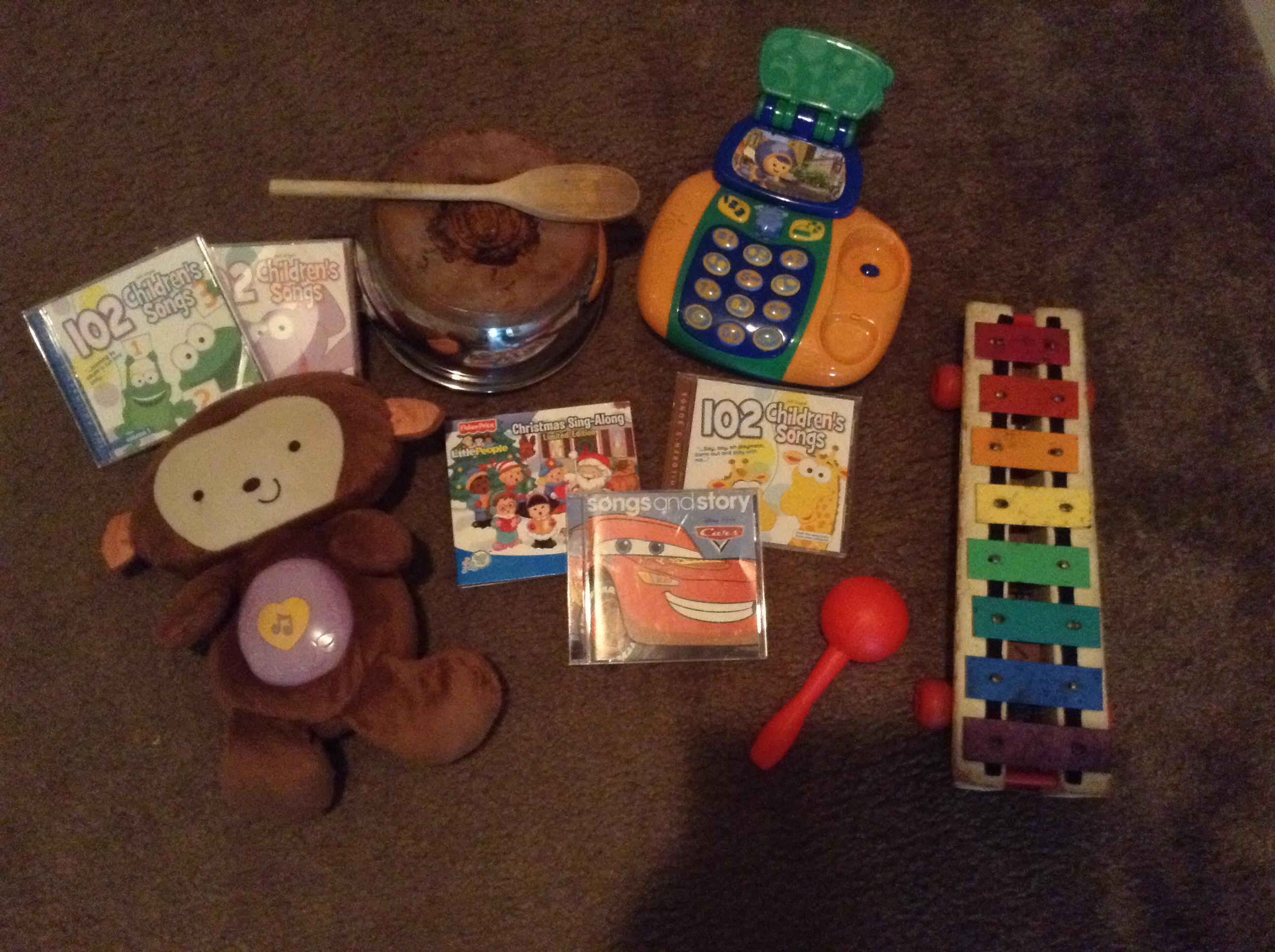
 

Here are just a few items that can be used to encourage the musical intelligence. Homemade musical instruments (like a pot and wooden spoon) work just as well as purchased instruments.

Here are just a few items that can be used to encourage the musical intelligence. Homemade musical instruments (like a pot and wooden spoon) work just as well as purchased instruments.

Toys, materials, and activities to encourage musical intelligence in young children include:

Simple musical and rhythm instruments (purchased or homemade)

Songs on CDs and tapes

Nature sounds

Background music on the radio

Audiotapes of children’s nursery rhymes or poetry

Singing with or to your child

Videos of songs or finger plays (like “Five Little Monkeys”)

Musical stuffed animals (for naptime)

Books with rhythmic language patterns (like Dr. Seuss)

Toys that play music or sounds (such as toy telephones)


I hope you are finding this series helpful in planning a multiple intelligence rich environment for the children in your lives. Feel free to comment on materials that you use to encourage the musical intelligence.

In the next installment of this series, I will explain the naturalist intelligence.
Leave a comment »

Multiple Intelligences in Your Home Part 2

In the first part of this series I covered the bodily-kinesthetic intelligence. When you see young children trying to climb up your sofa, putting on a cape and mask before zooming around the house, or making “snakes” with Playdoh, they are engaging their bodily-kinesthetic intelligence.

However, when you see children mixing two watercolors together, piecing together Lego blocks to look like the picture on the Logo box, or watching a children’s video on your iPad, they are using their spatial intelligence.

SPATIAL INTELLIGENCE

Children with strengths in the spatial intelligence are attracted to the color, line, and shapes of their environment. Another part of this learning style is the ability to think in pictures and see visual relationships. Allowing young children the opportunity to daydream, manipulate models, and express themselves through art media would be consistent with the spatial intelligence.  Visual presentations such as posters, videos, and demonstrations should also be made available when engaging children through the spatial intelligence.

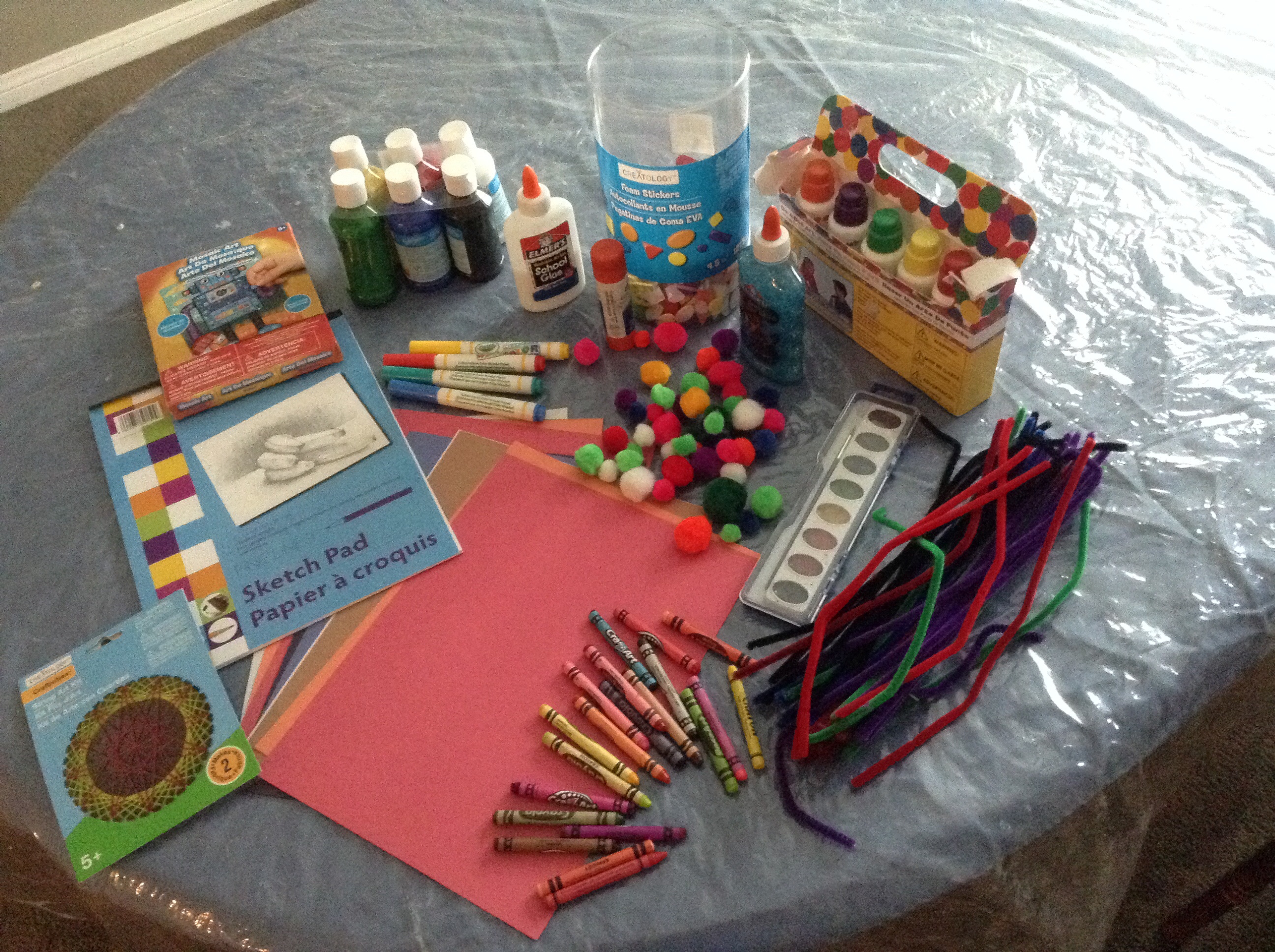
Here are some materials that are provided to my grandsons to encourage their spatial intelligence.

Here are some materials that are provided to my grandsons to encourage their spatial intelligence.

As I begin the list of some items that might be part of an enriched spatial multiple intelligence environment, keep in mind that some items fit into more than one category. For example blocks can be found in spatial (for creating structure and spaces), but blocks also require fine motor coordination so they are additionally bodily-kinesthetic tools.

Here are some ideas for spatial materials:

Drawing utensils such as crayons, markers, and sidewalk chalk

Paper: construction, fingerpainting, sketching, tissue

Paints: fingerpaints, watercolors, temperas, dot paints, brushes

Playdough, slime, modeling clay

Glue stick, glue bottle, glitter glue

Foam board (or precut foam board shapes)

Craft sticks, pipe cleaners, pom-poms, google eyes

Recyclables such as egg cartons, boxes, paper towel rolls

Access to media to see children’s videos, apps, or games

Posters for children (animals, cars, trains, alphabet, numbers and shapes, or anything that interests them)

Puzzles and mazes

Maps and globes (The grands especially love to keep the souvenir maps they get at zoos.)

Construction sets or materials (i.e. Legos)

Model sets to make cars, boats, spaceships,etc.

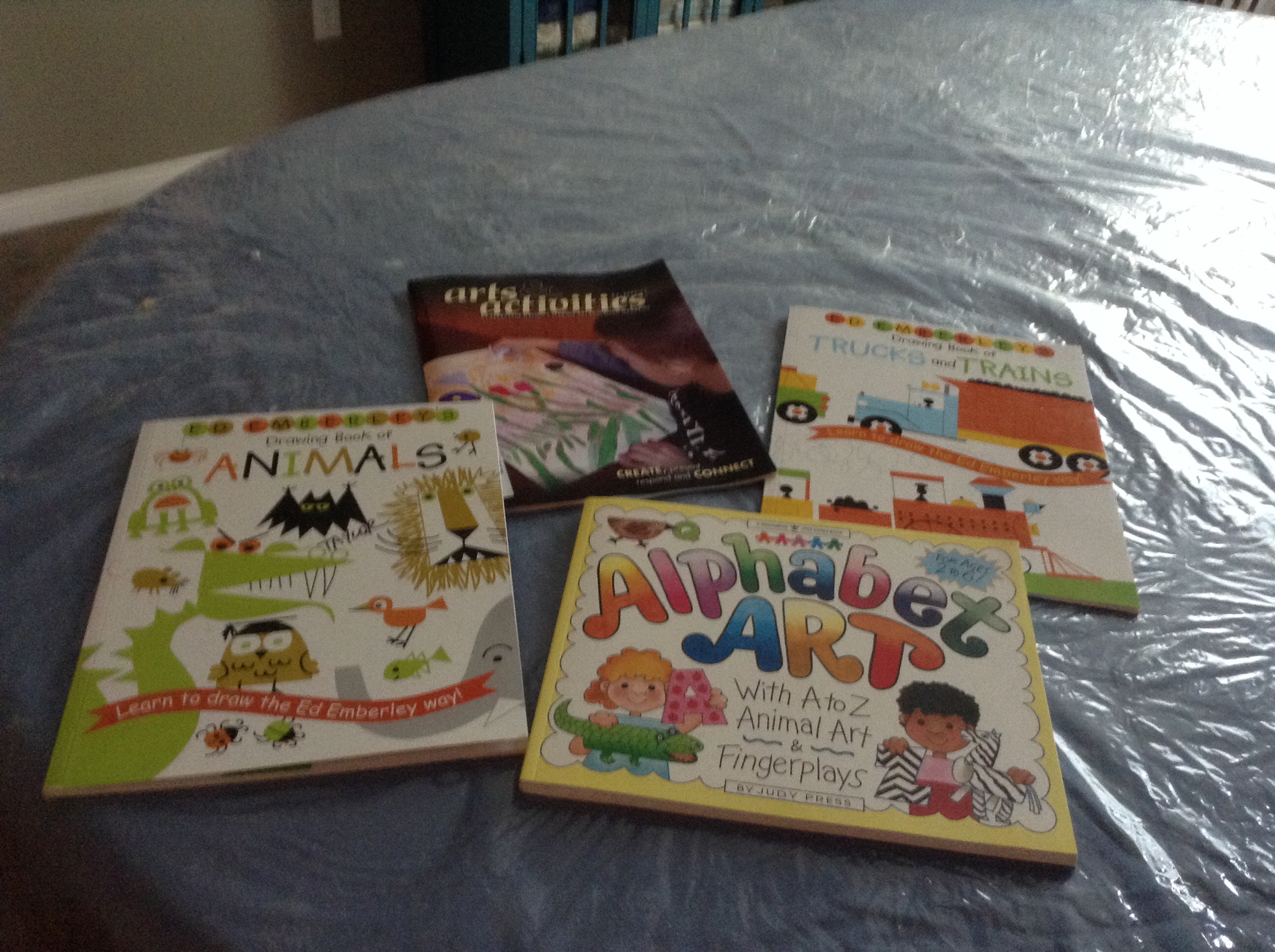
Art books and craft books

Art books and magazines are also great materials to have available. Since our grandsons are still fairly young, these materials are used by the adults who provide the arts and crafts activities for the grands.

Art books and magazines are also great materials to have available. Since our grandsons are still fairly young, these materials are used by the adults who provide the arts and crafts activities for the grands.

There are so many other materials that could be used to encourage a child’s spatial intelligence. I get new ideas all the time from other bloggers. Feel free to comment on materials that you have found useful.

In the third part of this series, I will cover the musical intelligence.

Leave a comment »

Multiple Intelligences in Your Home Part 1

For young children, learning is not always planned. It just happens….all the time. That is why parents and educators try to create a stimulating environment for children filled with a variety of colorful posters, books, blocks, crayons, and other toys. Spontaneous investigation and play with these materials is extremely important.

In providing an appealing environment for your home (day care room, classroom), why not offer items for each of the eight intelligences? You most likely have done so instinctively, even if you’ve never heard of the Theory of  Multiple Intelligences before reading this blog.

So I am starting a series to highlight some items for young children that would lend themselves to each of the intelligences. This is not an exhaustive list, but should be useful in considering materials you already have or want to get to help children utilize each of their eight intelligences.

I’ll start with a brief overview of each intelligence before listing some components of a multiple intelligence rich environment.

BODILY-KINESTHETIC INTELLIGENCE

This intelligence involves learning through fine and gross motor activities. With this intelligence, people process information through their tactile senses, movement, and expression. Basically any physical activity or hands-on activity would fit into this category.  Creative dramatics such as role playing, pantomimes, and charades are also using the bodily-kinesthetic intelligence.

Keep in mind that many bodily-kinesthetic materials can also be categorized under the other intelligences. For example, crayons are found in the bodily-kinesthetic intelligence (because they contribute to fine motor skills) as well as spatial intelligence (because crayons can create pictures). Toys and other supplies to promote bodily-kinesthetic learning opportunities include:

Some of our bodily-kinesthetic toys and materials.

Some of our bodily-kinesthetic toys and materials.


Playdough, silly putty, and slime

Dry erase boards and markers

Coloring book with crayons and markers

Safety scissors

Lacing and beading toys

Balls of all sizes, including balance balls and nerf balls

Scooters, bikes

Pull toys

Sensory bins 0f rice, beans, pasta, or kinetic sand

Mini trampolines

Dress up clothes and fabric remnants (to create their own fashions)

Blocks, Legos, and other construction sets

Toy cars, trucks, buses, airplanes, helicopters

Toy tools and kitchen utensils

Stacking cups or rings

Sandbox toys

Water table toys, squirt guns, (and bathtub toys for the home)

Plastic containers with lids (could be empty and cleaned yogurt tubs)

Outdoor play equipment such as basketball hoops, swings, slides, climbing ropes

Hula hoops, pool noodles, and jump ropes

Butterfly nets

Musical instruments such as xylophones, drums, and maracas

Play tunnels (could be made from large cardboard boxes)

Puzzles and mazes

Exercise videos for children

Well, this list could go on and on, but you get the idea. Feel free to comment on other bodily-kinesthetic materials you use in your home or classroom for young children.

In Part 2 of this series, I will blog about materials for the spatial intelligence.

Hip Homeschool Moms

2 Comments »

Multiple Intelligences and my Grandsons

Hi, I’m Nancy, also known as “Mimi” to the grands. I’m a former public school teacher who retired to spend more time with my family including watching my three grandsons several days each week. For the sake of their privacy, I will use the names Tigger (8), Kona (6), and Tahoe (4) when I mention them.

Even though I am retired, I still adore teaching, and providing enriching learning experiences for my grandsons is very important to me. Tigger and Kona attend a public charter school and Tahoe attends a local preschool a couple days a week (on the days that I do not watch him). I’m not sure if I would be considered a homeschooler, an afterschooler, or a caregiver. I guess the simplest way to describe my situation is I am still teaching, and my grandsons are the ones I teach.

During my many years of teaching, I was inspired by many professional development workshops and courses. One of the most useful of these teaching strategies was Howard Gardner’s Theory of Multiple Intelligences. In his theory, Gardner proposed that everyone possesses their own unique combination of eight different intelligences (ways of learning). These intelligences are linguistic, logical-mathematical, spatial, musical, bodily-kinesthetic, interpersonal, intrapersonal, and naturalist. Gardner believed that since everyone has a different mixture of these intelligences, it was important that educators include all of these in their teaching to make new learning accessible to all students.

So what does Multiple Intelligences have to do with my grandsons? I obviously want to plan activities for the grands that are going to be engaging to them. Keeping the eight different intelligences in mind as I choose learning experiences for them will ensure that I reach whatever blend of these intelligences my grandsons possess. In other words, I want my grandsons to enjoy the learning process on their way to becoming life long learners.

I hope to share my learning plans and experiences with the readers of my blog. I hope you will drop by again, perhaps to inspire you in your role as a parent, grandparent, caregiver, or educator.


Leave a comment »

Laura Grace Weldon

Free Range Learning, Creative Living, Gentle Encouragement, Big Questions, Poetry, Occasional Drollery

Teach Beside Me

Educate Creatively- Hands-on teaching ideas

P is for Preschooler

Smile! You’re at the best WordPress.com site ever

Life with Moore Babies

Educating Through Multiple Intelligences

about these things

Philippians 4:8

booksandopinions.com

The Book Reviews You Can Trust!

Enchanted HomeSchooling Mom

Educating Through Multiple Intelligences

A Homeschool Mom

Inspiration For Learning and Life.

I Can Teach My Child!

Educating Through Multiple Intelligences

Educating Through Multiple Intelligences

Learn with Play at Home

Educating Through Multiple Intelligences

Learn Play Imagine

Educating Through Multiple Intelligences

Epic Fun for Kids

Educating Through Multiple Intelligences

No Time For Flash Cards

Educating Through Multiple Intelligences

Real Life at Home

printables, worksheets, activities, and crafts for kids

Teaching & Being a Mom

Educating Through Multiple Intelligences

Carrots Are Orange Montessori

Educating Through Multiple Intelligences

The OT Toolbox

Educating Through Multiple Intelligences

Simple Homeschool

Educating Through Multiple Intelligences

Coffee Cups and Crayons

Simple play ideas, learning activities, kids crafts and party ideas, plus acts of kindness for kids!

Playdough To Plato

Empowering teachers with the tools, training, and support you need to help EVERY student learn to read.

The Measured Mom

Educating Through Multiple Intelligences