Mimi and the Grands

Educating Through Multiple Intelligences

Multiple Intelligences in Your Home Part 8

Does your child wonder how things work? Do your children like to count their toys or organize them into categories? These would be indications of their logical-mathematical intelligence.   This intelligence is also called “number smart” because it usually involves a thought process using symbols or numbers.

I can see my grandsons using their logical-mathematical intelligences when they play. The children in your care probably do these same things. For example, they count the number of trains they can fit on their train tracks,  the number of grapes I give each of them (to be sure they are each getting their equal share), and they count backwards from ten when they are launching their space shuttle toy. I love their fascination with their mom’s measuring tape. Just the other day,  Kona found the measuring tape and was measuring the height of the chairs by the kitchen counter. (Not sure why.) Tigger is really interested in coins right now, especially since he learned that they can add up to different amounts of money. He likes to play with the pennies, nickels, dimes, and quarters that I keep in his car seat cup holder while I drive him home from school.

LOGICAL MATHEMATICAL

Our logical-mathematical thinking allows us to reason, see patterns, and solve problems. People who are strong in the logical-mathematical intelligence are good at analysis so they are drawn to games that require strategy. Besides being strong in calculations,  they additionally enjoy science experiments, doing puzzles, and solving mysteries. The character Sherlock Holmes was created as a logical-mathematical thinker. Real people who would be considered having strengths in the logical-mathematical intelligence would be Bill Gates or Albert Einstein. As adults, people with strengths in this area might pursue careers such as doctors, scientists, accountants, or detectives.
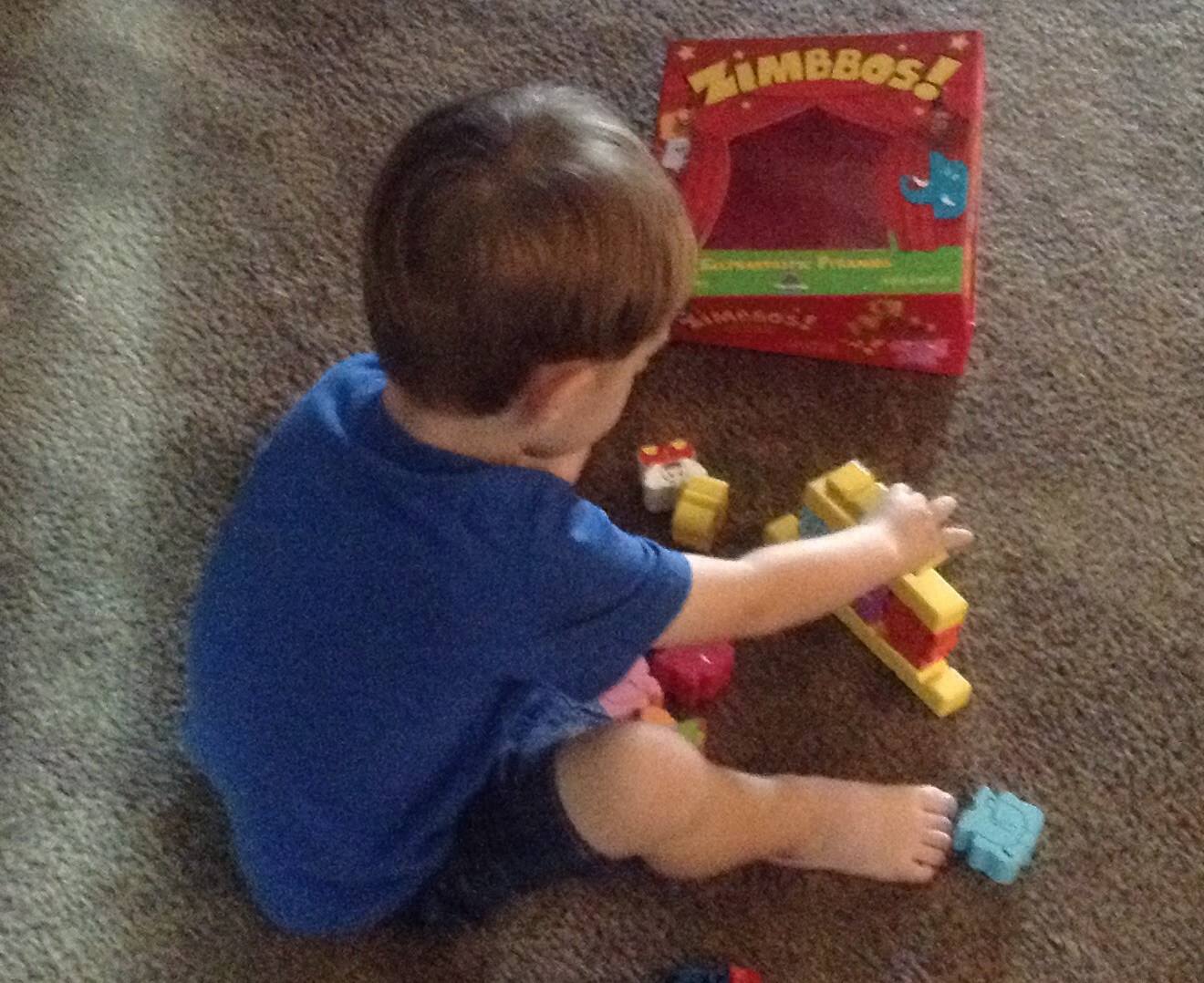
 

Tahoe can't resist a chance to play this math game by himself. It is best to let children play with the manipulatives for awhile first before teaching them the rules of the game.

Tahoe can’t resist a chance to play this math game by himself. It is best to let children play with the manipulatives for awhile first before teaching them the rules of the game.

To encourage the engagement of a child’s logical-mathematical intelligence, these materials or activities could be provided at home:

blocks (building, attribute, etc.)

iPad apps (such as Counting Caterpillars and Marble Math, Jr.)

board games (math specific or just ones that use dice or numbers to move spaces)

educational children’s shows that focus on math (like Team Umizoomi)

rulers, measuring cups, measuring spoons, thermometers

multiples of any favorite toy (my grands love to count their cars and trains)

geoboards

construction sets

toy clocks

tangrams

having items for them to categorize (buttons, leaves, small toys)

card games (like Go Fish)

dominoes

toy phones, computers, and calculators

shopping ads

science experiments that use numbers (Where is your shadow at 10 a.m. Noon, 2 p.m. and 4 p.m.?)

number lines (could be created with sidewalk chalk on your driveway)

shape sorting toys

creating patterns together (red button, green button, red button, green button, etc.)

cutting food into fractions (apple in halves, sandwich in fourths)

explaining how you  solve a life problem using math (I can get 2 avocados for $1, so I’ll get 4 avocados for $2.)


I hope this series has given you some basic information into the eight intelligences that we all possess, as theorized by Dr. Howard Gardner. In future posts I will show how I apply this theory when planning learning units for my grandsons.

In my next post, I will discuss a different topic; the best books I’ve read over the past few months. Reading is one of my favorite pastimes, other than watching the grands, of course. I hope you’ll be able to relate to the struggles I have had in finding time to read, even in retirement. And if you are looking for a good book to read, maybe one of my recommendations will strike your fancy.
Leave a comment »

Multiple Intelligences in Your Home Part 7

I have chosen to explain linguistic (and logical mathematical) intelligence in my later posts because these two intelligences are the ones that often come to mind when people think of giftedness. Historically, most people were judged on their intelligence according to their ability in reading, writing, and mathematics. Those were the mental capabilities tested in most IQ tests. But according to Howard Gardner’s Theory of Multiple Intelligence, each individual has their own unique blend of the eight intelligences, and can be gifted in other ways. I wanted my readers to explore the other six intelligences first before I discussed the intelligences which may be more familiar to them. This post will provide an explanation of the linguistic intelligence. (By the way, people who read blogs are often strong in this intelligence.)

LINGUISTIC INTELLIGENCE

This intelligence is also known as being “word smart” because it has to do with an acuteness towards language relating to speaking, listening, reading, and writing words. People who have strengths in this intelligence enjoy expressing themselves through words, and may have the ability to learn other languages easily. Often people who are highly linguistic may choose careers as journalists, editors, writers, motivational speakers, politicians, teachers, religious leaders, interpreters, and tour guides.

To encourage children to develop or strengthen their linguistic intelligence, here are just a few materials and activities that you might use:


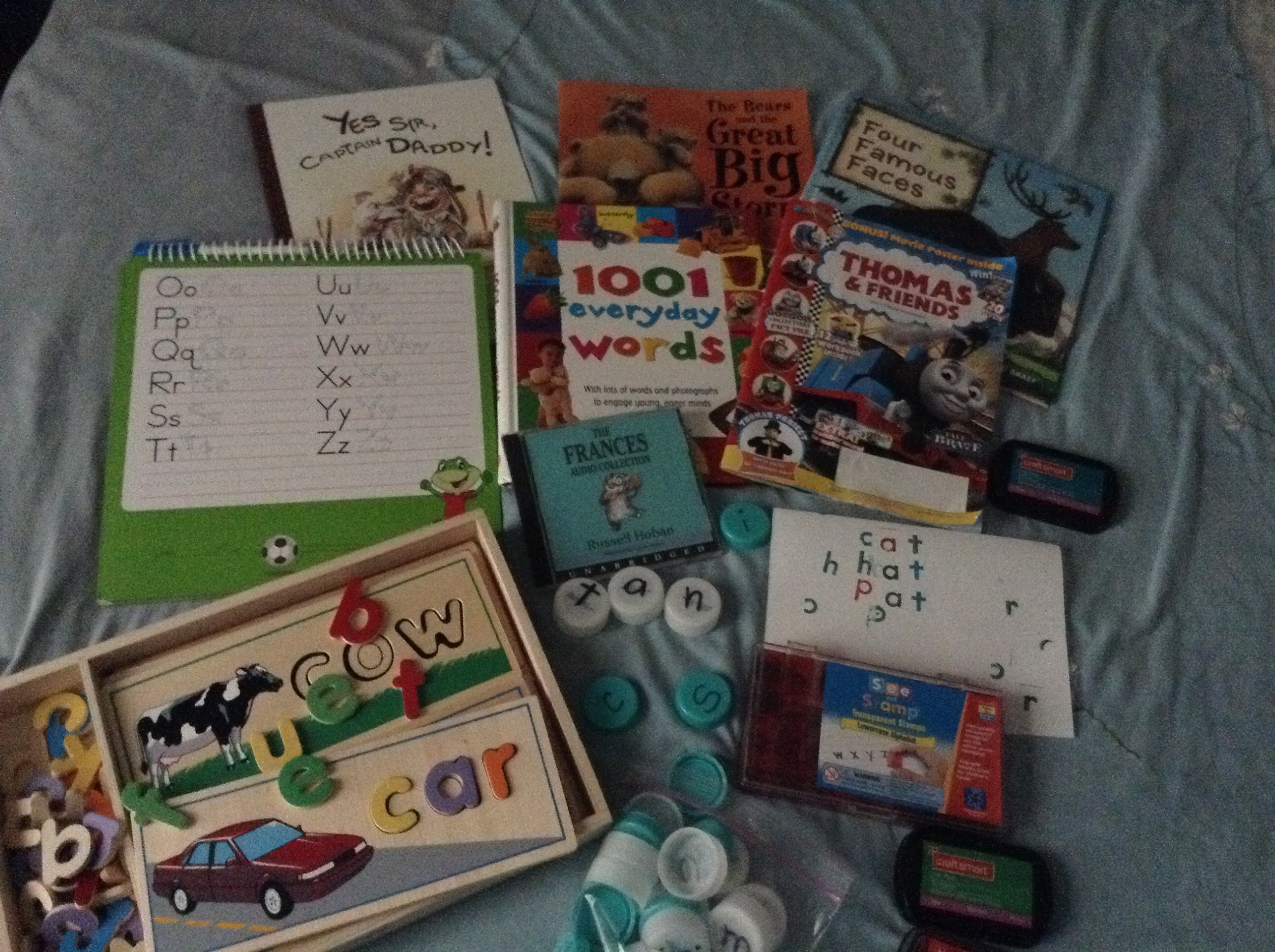
To encourage the linguistic intelligence, it is helpful to have a variety of genres of books, writing materials, and audiobooks.

To encourage the linguistic intelligence, it is helpful to have a variety of genres of books, writing materials, and audiobooks.

lots of children’s books of different genres (fiction, non-fiction, poetry, etc.)

children’s magazines and other appropriate printed material

alphabet puzzles

alphabet magnets

picture dictionaries

letter stamps and stamp pads

writing paper or journals

individual dry erase boards (with dry erase markers and erasers)

iPad apps (such as Reading Raven)

educational children’s show on reading (such as Wallykazaam)

making up stories together

using sign language

family discussions

listening to audiobooks

telling riddles and jokes

singing and/or listening to songs

reading signs when traveling

playing word games like Scrabble and Boggle


I hope this series is providing a nice overview of Howard Gardner’s Theory of Multiple Intelligences. If you would like more information on his theory,  Dr. Gardner has written several books including Frames of Mind: The Theory of Multiple Intelligences (published in 1983 so it does not cover the naturalist intelligence which he added later). 

The last part of this series will cover the logical-mathematical intelligence. Future posts that  currently are in draft form include a long blog on using multiple intelligences to teach short vowels, and a more personal article on how I exercise my linguistic intelligence: some of my favorite books of the past few months.

Leave a comment »

Multiple Intelligences in Your Home Part 6

If you are someone who likes to be a part of a team, loves being around friends, and shows concern for others, you may be very strong in the interpersonal intelligence. The root word “inter” means between or among. So interpersonal intelligence refers to the connections between or among people.

INTERPERSONAL INTELLIGENCE

Children who are strong in this intelligence relate and communicate to people very well. They are usually extroverted, have empathy for others, enjoy persuading others to their point of view, can see other people’s perspectives, and like to be in charge of groups of people.  Mother Theresa and U. S. President Ronald Reagan would be examples of people who were strongly interpersonal.

Keep in mind that people can be both strong in the intrapersonal (self smart) and interpersonal (people smart) intelligences.

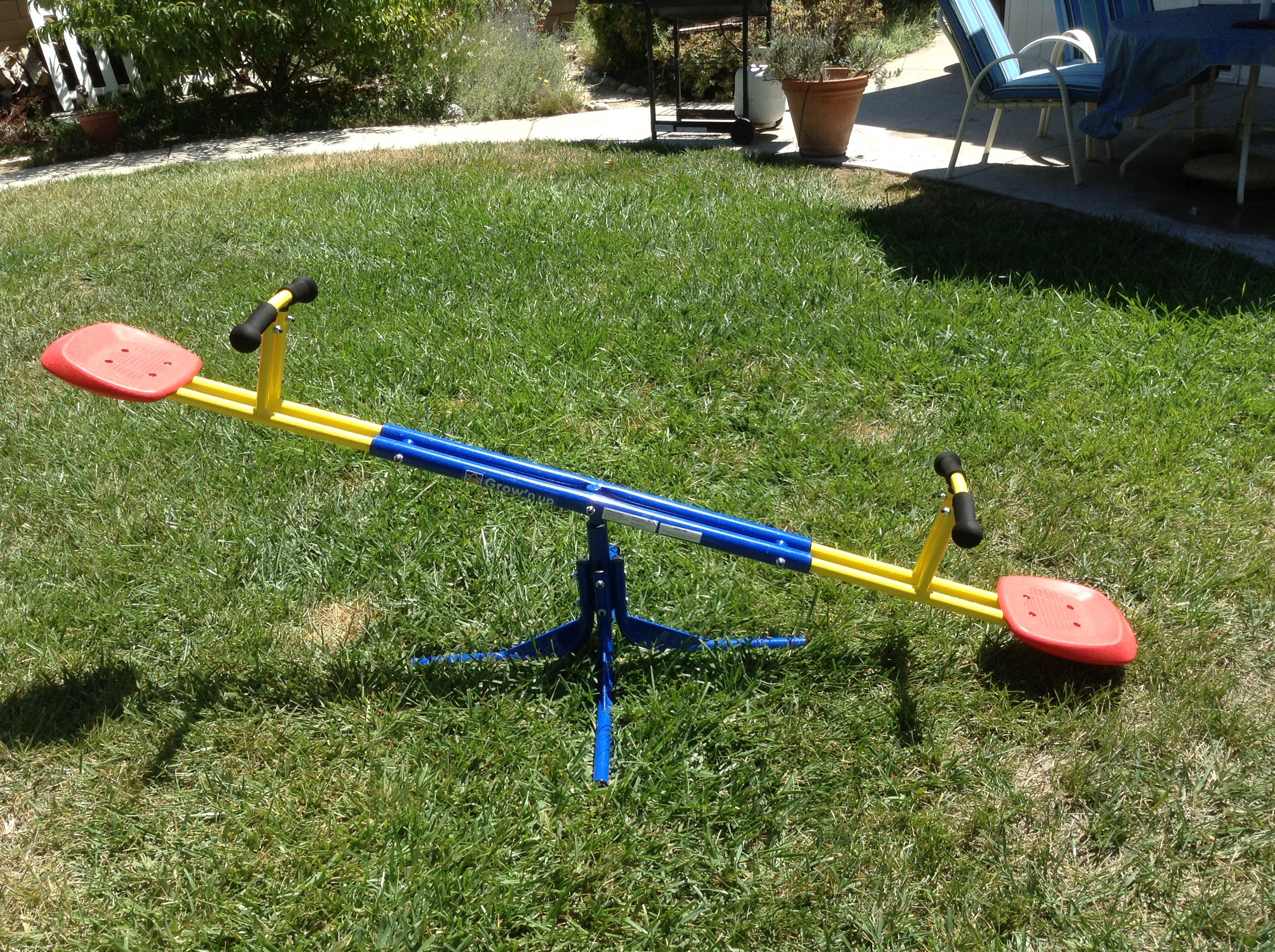
To encourage a child's interpersonal intelligence, have them play with materials or equipment that requires participation by more than one person.
To encourage a child’s interpersonal intelligence, have them play with material or equipment that requires participation by more than one person.


 To support and strengthen a child’s interpersonal intelligence, provide materials and opportunities in which the child needs to engage with others. Here are a few ideas:

play dates

board games (or any game that requires collaboration)

play equipment that requires more than one person

chatting on phone with grandma (or other relatives and close friends)

role playing (tea parties, how to order at a restaurant)

team sports

giving opportunities to lead an activity or group

cooking with adults

volunteering (with an adult)

introducing them to people in the community (neighbors, librarians, grocers, police officers)


The last two posts in this series will give overviews of the linguistic (word smart) and logical-mathematical (number smart) intelligences. Then I will begin a series on applying the Theory of Multiple Intelligences to the teaching of short vowel sounds.


Leave a comment »

Multiple Intelligences in Your Home Part 4

So far in this series I have covered the bodily-kinesthetic, spatial, and musical intelligences. These are part of the original seven intelligences as proposed by Howard Gardner when he first published his book Frames of Mind:The Theory of Multiple Intelligences in 1983.  Gardner added the naturalist intelligence in 1999.

Do you look forward to a summer camping trip, autumn colors in the trees, snow capped mountains, or the first blooms in the spring?  If you have ever embraced the smell of the salty air at the beach, or enjoyed the pine scented fragrance of the forests, you were engaging your naturalist intelligence. I remember how much my 4th and 5th grade students looked forward to the afternoons I would walk them to the park next to our school to read under the trees. We could have stayed in the classroom to read for an hour, but there  was something special about spreading out blankets on the grass and curling up with a good book on a warm spring day.

According to Gardner, people with a strong naturalist intelligence are highly aware of patterns and changes to their environment, and like to relate their learning to the natural world. Nurturing and interacting with plants and animals are very important activities for people who are strong in the naturalist intelligence.

Here are some supplies or activities you could use to encourage the naturalist intelligence in young children:

Taking trips so young children can enjoy the learning experiences in the environment will inspire their naturalist intelligence.

Taking trips so young children can enjoy the learning experiences in the environment will inspire their naturalist intelligence.

Trips to local zoos, parks, orchards, gardens, and outdoor museums

Planting and caring for a garden

Caring for pets

Maintaining bird feeders in your backyard

Playing in dirt, mud, or sand (like building sandcastles)

Lots of time observing plants, animals, insects, etc. in your own outdoor spaces

Books on animals, plants, weather, environments, butterflies, birds, etc.

Supervised use of magnifying glasses, telescopes, cameras, and binoculars

Camping trips to beaches, state and national parks

Park ranger talks

Hiking local trails

Children’s nature videos and television shows (such as “Wild Kratts” and “Octonauts”)

Reading books under a tree


Now that we have covered four of the intelligences, I hope you are seeing that you have most likely already provided many of these materials or experiences for the children in your care. Feel free to share some of your ideas with me too.  I love getting new inspirations.

In the next article in this series I will discuss the intrapersonal intelligence.

Leave a comment »

Multiple Intelligences and my Grandsons

Hi, I’m Nancy, also known as “Mimi” to the grands. I’m a former public school teacher who retired to spend more time with my family including watching my three grandsons several days each week. For the sake of their privacy, I will use the names Tigger (8), Kona (6), and Tahoe (4) when I mention them.

Even though I am retired, I still adore teaching, and providing enriching learning experiences for my grandsons is very important to me. Tigger and Kona attend a public charter school and Tahoe attends a local preschool a couple days a week (on the days that I do not watch him). I’m not sure if I would be considered a homeschooler, an afterschooler, or a caregiver. I guess the simplest way to describe my situation is I am still teaching, and my grandsons are the ones I teach.

During my many years of teaching, I was inspired by many professional development workshops and courses. One of the most useful of these teaching strategies was Howard Gardner’s Theory of Multiple Intelligences. In his theory, Gardner proposed that everyone possesses their own unique combination of eight different intelligences (ways of learning). These intelligences are linguistic, logical-mathematical, spatial, musical, bodily-kinesthetic, interpersonal, intrapersonal, and naturalist. Gardner believed that since everyone has a different mixture of these intelligences, it was important that educators include all of these in their teaching to make new learning accessible to all students.

So what does Multiple Intelligences have to do with my grandsons? I obviously want to plan activities for the grands that are going to be engaging to them. Keeping the eight different intelligences in mind as I choose learning experiences for them will ensure that I reach whatever blend of these intelligences my grandsons possess. In other words, I want my grandsons to enjoy the learning process on their way to becoming life long learners.

I hope to share my learning plans and experiences with the readers of my blog. I hope you will drop by again, perhaps to inspire you in your role as a parent, grandparent, caregiver, or educator.


Leave a comment »

Laura Grace Weldon

Free Range Learning, Creative Living, Gentle Encouragement, Big Questions, Poetry, Occasional Drollery

Teach Beside Me

Educate Creatively- Hands-on teaching ideas

P is for Preschooler

Smile! You’re at the best WordPress.com site ever

Life with Moore Babies

Educating Through Multiple Intelligences

about these things

Philippians 4:8

booksandopinions.com

The Book Reviews You Can Trust!

Enchanted HomeSchooling Mom

Educating Through Multiple Intelligences

A Homeschool Mom

Inspiration For Learning and Life.

I Can Teach My Child!

Educating Through Multiple Intelligences

Educating Through Multiple Intelligences

Learn with Play at Home

Educating Through Multiple Intelligences

Learn Play Imagine

Educating Through Multiple Intelligences

Epic Fun for Kids

Educating Through Multiple Intelligences

No Time For Flash Cards

Educating Through Multiple Intelligences

Real Life at Home

printables, worksheets, activities, and crafts for kids

Teaching & Being a Mom

Educating Through Multiple Intelligences

Carrots Are Orange Montessori

Educating Through Multiple Intelligences

The OT Toolbox

Educating Through Multiple Intelligences

Simple Homeschool

Educating Through Multiple Intelligences

Coffee Cups and Crayons

Simple play ideas, learning activities, kids crafts and party ideas, plus acts of kindness for kids!

Playdough To Plato

Empowering teachers with the tools, training, and support you need to help EVERY student learn to read.

Reach All Readers

Educating Through Multiple Intelligences