Mimi and the Grands

Educating Through Multiple Intelligences

Whales, Weather, and the Letter W

The school year is almost over and I’m finishing up the alphabet during the next few weeks. Kona just turned 5 and will be starting kindergarten in a charter school in the fall. I’m sure he’ll do great, especially since this charter school uses multiple intelligences as one of its main teaching strategies! He loves to have books read to him, and enjoys “reading” the same books to himself. Since Kona could name all the uppercase and lowercase letters of the alphabet at the start of this “pre-school” year, I geared his alphabet lessons to increasing his vocabulary, and learning the consonant sounds and short vowel sounds of the letters. He has done very well learning all the letter sounds, and I love how he already tries to “sound out” words in books. 

Tahoe, (3), will get the alphabet again next “school” year. He has picked up the name of a few letters this year, but most importantly, his vocabulary and fine motor skills have really improved this past year. He also loves to have books read to him, but what Tahoe really likes is to sing! My alphabet lessons for him next year will include a lot more music and nursery rhymes.

And Tigger (still 6), well, all I can say is Wow! He is finishing up first grade at a charter school and for the last month or so, he has been reading easy chapter books! What really pleases me is that he reads with such great expression. This is quite a difference from the beginning of first grade when he was still having difficulty with basic sight words and c-v-c blending.

So this unit study is on the letter “W” and before the middle of June, I should be able to work with the grands on X, Y, and Z. 

As always, I planned a variety of lessons in all eight intelligences to have differentiated activities for each grandson: Tigger (6), Kona (5), and Tahoe (3). I try to do two intelligences per day, so this would be at least a four day unit. I usually plan more activities than I can actually do with the grands, but I always do at least one activity from each intelligence. As you can see, many of these activities do not need a lot of materials or preparation, which is why I love using Multiple Intelligence activities with my grandsons rather than worksheets.

Linguistic (Word Smart)

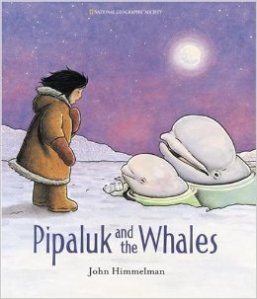
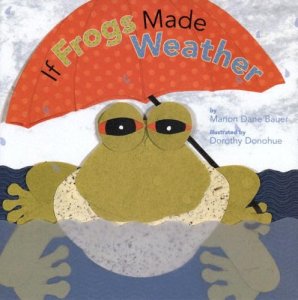
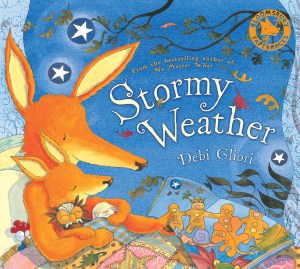
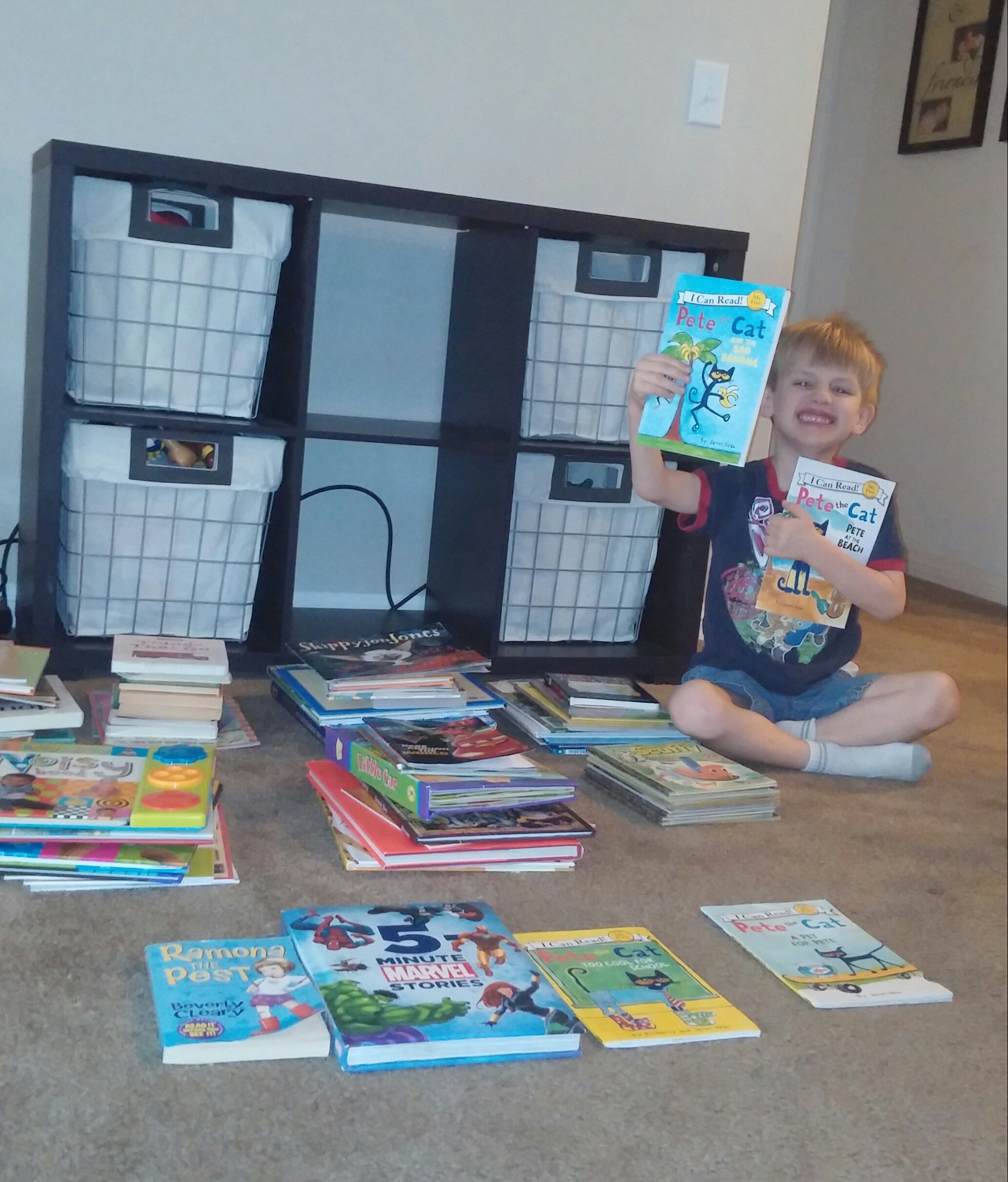
Read books-I decided to focus on two themes for the letter W: whales and weather. These are topics I have taught to older students and always enjoyed, but I needed to adapt my lessons for the ages of my grandsons. I used these books as part of the Letter “W” unit study:
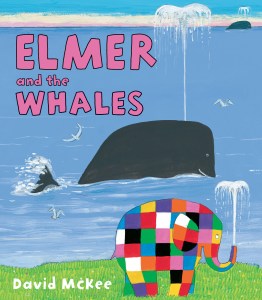


Discussions-I adapted my discussions of the books with the grands depending on the book and the concepts I was trying to reinforce. Pipaluk and the Whales was a good book for Tigger. He enjoyed looking at the pictures on each page to predict what would happen before we read it together. We also talked about the survival needs for these whales while reading the book. After reading each page of If Frogs Made Weather, I asked Kona and Tigger to summarize the type of weather each animal preferred. While reading Stormy Weather with the grands, we identified rhyming words. Elmer and the Whales was a good book for discussing sequence.  For Tahoe, besides discussing the words that began with the “W” sound in each book, we discussed the animals on each page of the stories. 

Audio books-Since I have the grands in the car for about an hour each afternoon to pick up the oldest from school, I try to find audio books from the local library to play in the car to go along with my lessons . For the letter W I was able to find these two audio books: He’s Got the Whole World in His Hands (which came with a beautifully illustrated book) and Hello, Mrs. Piggle Wiggle (which appealed more to Tigger).


Logical/Mathematical Intelligence (Number/Reasoning Smart)

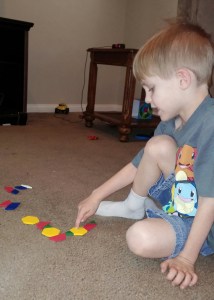
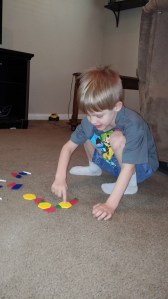
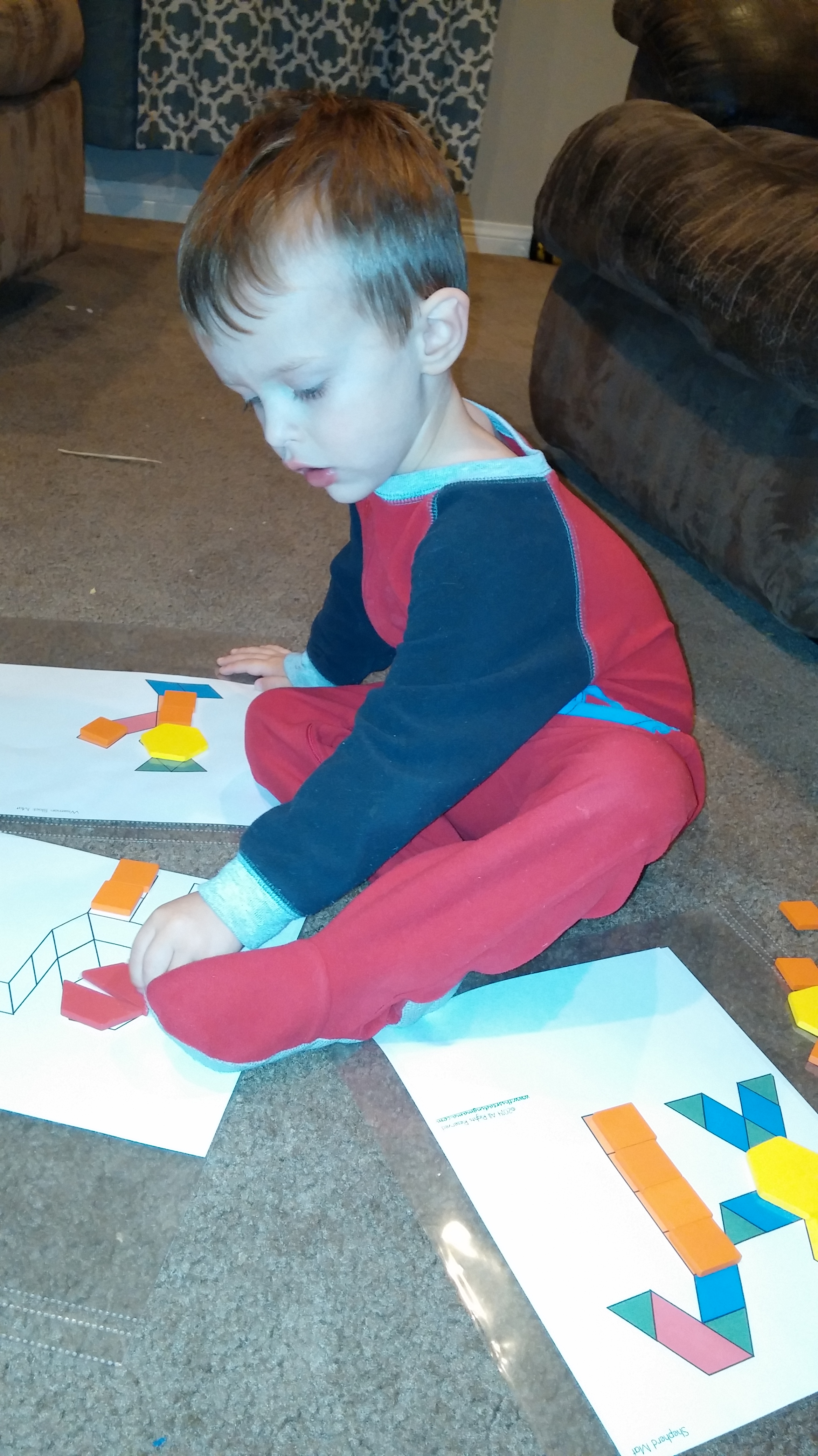
Counting activities: I had Kona count out 23 pattern blocks and make the letter “W” from them (since “W” is the 23rd letter of the alphabet). I practiced counting to 23 with Tahoe, although he still misses a few numbers once we get past “twelve”.

MeasuringSince weather is one of our topics for the letter “W”, we discussed the rain we have had this past week. While we live in “drought country”, we actually get rain from time to time. Of course, every time we get rain, some people always wonder if the drought is over. I planned a little demonstration with some clear glass jars and units marked along the side to show them how much rain we got last year (approx. 6 inches), how much we got this year (almost 9 inches), and our average amount of rainfall in a year (about 15 inches) . No doubt about it, still need a whole lot of rain in our part of the country!


Bodily-Kinesthetic (Body Smart)

Walk This Way- The grands and I brainstormed the many ways someone could “walk” and practiced them. Some of the ways we discussed were backwards walking, crab walks, curvy walks, slow walks, fast walks, walking on our toes, etc. Then each grand had a turn to say “Walk This Way” and chose their favorite way to walk while everyone else followed along like a parade.

Pantomimes- We practiced several “W” words that are easy to pantomime such as: walk, whisper, wall, watermelon, wind, water, worm, wave, and witch. Then each grand chose one of the “W” words to pantomime and the rest of us had to guess the word.

 Spatial Intelligence (Picture Smart)

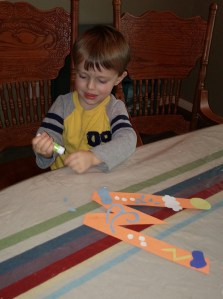
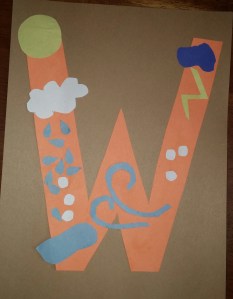
Letter crafts- After reading Stormy Weather and If Frogs Made Weather, I asked the grands for the types of weather mentioned in the books. I used this information to make cut out pictures for a craft project: wind, sun, clouds, rain, snow, fog, and lightning.  The grands then glued these cut outs to a letter “W” that I also cut out of construction paper.


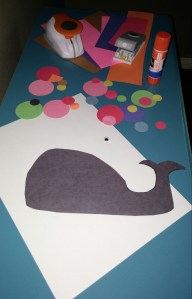
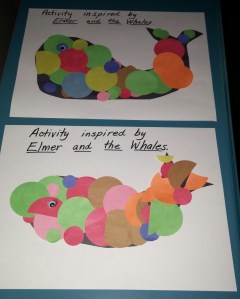
Other craft ideas– After reading Elmer and the Whales to the grands, I decided to use my new circle punches to create a craft to make the whales as colorful as Elmer. The grands loved it and Kona and Tigger loved using the circle punches to make new circles for their whales.

Videos- I am always able to find lots of short videos on the Internet that teach the sound of the letter I am teaching the grands. We also found short, educational videos on whales and weather. Additionally, I wanted to introduce the grands to weather forecasting. Besides watching weather reports live on the television, you can also find videos of weather reports. Watching these videos can be helpful, especially if you want to do some dramatic play activities (see Interpersonal ideas below). 

Naturalist Intelligence (Nature Smart)

Field trips (Wildlife Sanctuary)- We live about an hour away from a wildlife rehabilitation facility that we have visited several times (now called the Big Bear Alpine Zoo at Moonridge). This is a great field trip for the letter “W” to see wildlife up close and discuss how wildlife can be impacted by man. 

Outdoor Scavenger Hunt- We made a list of “W” words that could be found in nature and took a walk around our neighborhood to find as many as we could. Here is a partial list: weeds, worms, wind, wildlife, water.

    Interpersonal (People Smart)

Dramatic play- Weather Report”- After watching several weather reports, I thought it would be fun to do some dramatic play as weather reporters. You don’t have to gather props ahead of time, but if the grands think of a prop they want to use, I let them get it. 

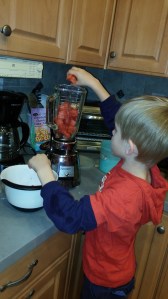
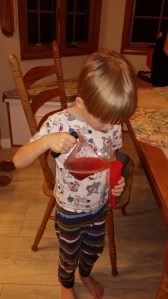
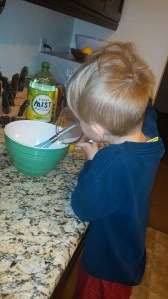
Cooking -I consider cooking to be an interpersonal activity, because the grands still need to work with adult supervision to create the food from the recipes. (When they are older and can read recipes on their own, cooking activities will be more linguistic.) For the letter “W” I found an easy watermelon popsicle recipe, which I adapted to fit into the time frame Kona and I had that day. The basic idea is to cut up enough watermelon to make 5 cups. The cut watermelon is put in the blender with 1/2 cup sugar, pureed, and then poured into a medium sized container to be placed in the freezer for a few hours to become “slushy”. (The puree shouldn’t be frozen at this point.) Then we added a small handful of mini chocolate chips (to look like watermelon seeds)  to the watermelon slush and stirred. Lastly, Kona and I poured the concoction into the popsicle molds that I already had on hand. The next day, he got to enjoy his watermelon popsicles.


I adapted this recipe to make it easier for my grandsons:

http://www.eat-yourself-skinny.com/2012/06/watermelon-ice-pops.html

(I didn’t have time to add the lime sherbet.)  I will probably make the entire recipe with the grands again at least once this summer…maybe for the Fourth of July! 


Intrapersonal Intelligence (Self Smart)

Independent reading– The grands love to look over the books we have previously read together on their own time.

Water PlaySince “water” begins with “W” I counted water play as an activity for this study unit. The grands have lots of bath toys to use during bath time. However, one day I gave them different sized plastic containers during their bath so they could experiment and discover the capacities of each container.


Musical Intelligence (Music Smart)

Finger plays and songs- I used “He’s Got the Whole World in His Hands” and the nursery rhyme “Wee Willie Winkie” with this study unit. If you don’t already know hand motions to use with “He’s Got the Whole Word in His Hands”, there are several videos on youtube that can help you.

Create your own fingerplays or songs- We created our own lyrics to “He’s Got the Whole In His Hands” to go along with whales and weather. For example:

“He’s got the wind and the clouds, in His hands….”

“He’s got the narwhal whale, in His hands….”


I hope you are finding these Multiple Intelligence activities useful as you plan to introduce letters to the children in your care. If you would like to see more of these unit studies as I created them, you can become a follower of this blog.
1 Comment »

Q-tips, Queen of Hearts, Quinoa and the Letter Q

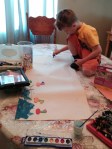
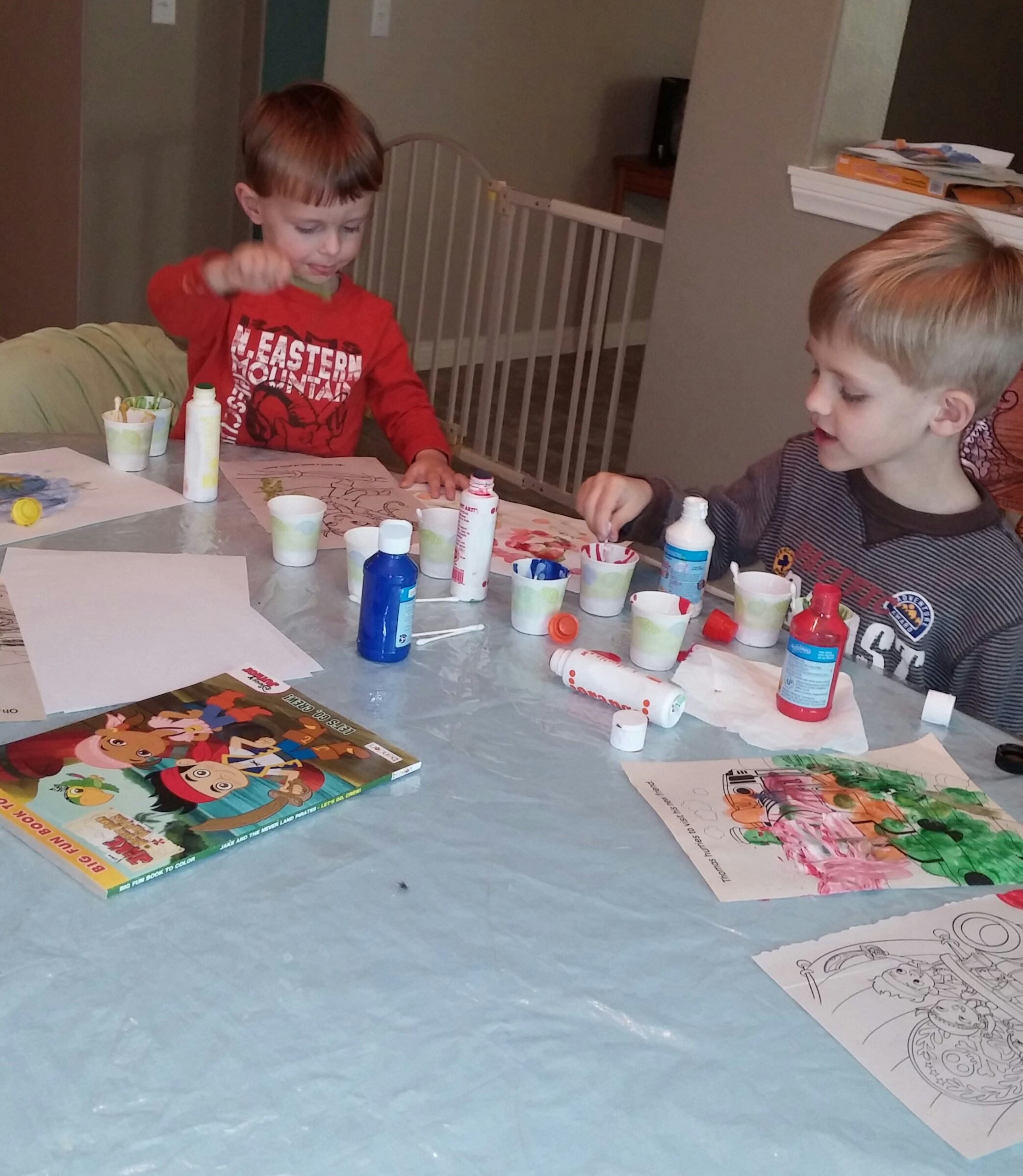
Tahoe and Kona loved painting with Q-tips as one of the activities in the Letter Q Study Unit.

Tahoe and Kona loved painting with Q-tips as one of the activities in the Letter Q Study Unit.

It has been a busy spring so far. Tahoe’s just turned three, Kona seems to have grown a foot, and Tigger is starting to read chapter books! Sometimes I wish that time could just stand still because the grands are growing up WAY TOO FAST!  Alas, I can’t stop time, so I have to remember to be “present” during all the times we have together RIGHT NOW.  One of the ways I can do that is by enjoying the many ways my grandsons learn as I engage them in fun activities that I pray will make learning so much fun for them that they will grow up to be lifelong learners.

It was time to begin the letter “Q” and I was not looking forward to it. I thought it would be a boring letter to teach, but boy was I wrong! I went to a one of the websites that always inspires me:

 http://www.themeasuredmom.com/letter-q/   

From there I began ordering books from the library for this unit of study. Once I pinpointed some great books to read to the grands, my imagination began to soar and I discovered or created many activities that we all really enjoyed.

So I planned a study unit that combined activities connected with the sound and formation of the letter Q. As always, I planned a variety of lessons in each intelligence to have differentiated activities for each grandson: Tigger (6), Kona (4), and Tahoe (3). I try to do two intelligences each day, so this would be a four day unit. (Tigger goes to a charter school, so he isn’t always able to do all the activities.)

I hope you are finding these Multiple Intelligence activities useful as you plan to introduce letters to the children in your care. If you would like to see more of these unit studies as I created them, you can become a follower of this blog.
Linguistic (Word Smart)

Read books-Every day I read the books for the study unit to the younger two grands. We discuss the title, author, illustrator, preview the book by looking at the pictures, and pick out words beginning with the letter “Q.” Tigger helps to read whenever he is able to join us.


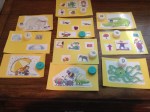
Matching  Pictures with Sounds-I have the grands match “bottle cap” letters of sounds we have been learning with picture cards. (To make the picture cards, I  use illustrations from the grands’ completed workbook and glue them on construction paper. I also save bottle caps from the gallon milk containers when they are empty and print letters on the bottle caps with a marker.  These are great ways to reuse items I already have on hand.)


Spatial Intelligence (Picture Smart)

 Letter crafts-I did two different crafts for this unit since my grands love arts and crafts.

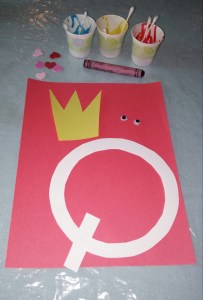
Since I was using the nursery rhyme about the “Queen of Hearts”, I used that as the inspiration for the capital letter “Q” project. The grands used q-tips to paint the construction paper Q and then added a crown, foam heart stickers, wiggly eyes and a drawn smile to complete the face.

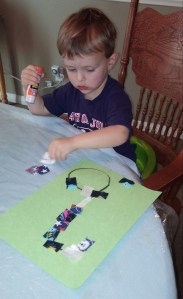
For the lowercase q, I had the grands glue pieces of fabric to a construction paper “q” to look like a quilt.


Videos-I played several videos I found online that teach the sound of the letter “Q” and had the grands repeat the sounds and words that began with the letter Q during the second playing of the video. Amazingly, after playing the video twice for Kona, I discovered him singing the letter Q song while he was playing with his legos later in the day.


   Interpersonal (People Smart)

Dramatic play-I love using dramatic play as a way to help the grands understand the stories I read to them. A fun activity is to have the grands pretend they are the characters in the book and act out the book with their siblings and/or adult. 

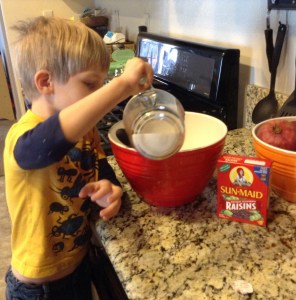
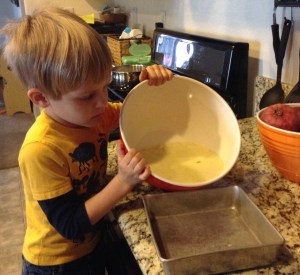
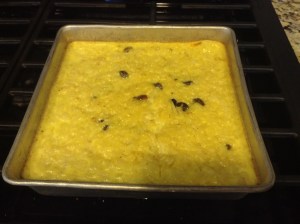
Cooking– I found a recipe online for Quinoa “Mac” and Cheese. I simplified it so Kona could help make the recipe. We used pre-cooked quinoa, one and a half cups of shredded cheddar cheese (sharp), two eggs, one cup of milk, salt, and pepper. It was baked at 350 degrees for 25 minutes. Both Kona and Tahoe gobbled it up at lunch time. Here is the original recipe that I adapted for our use:

 http://www.monimeals.com/meals/quinoa-mac-n-cheese/


Bodily-Kinesthetic (Body Smart)

Pantomimes- I put pictures/words that begin with the letter “Q” on cards and together we practiced pantomimes for each of them. Then we played a game where the grandsons picked out a card without showing me, and then pantomimed the word or picture.

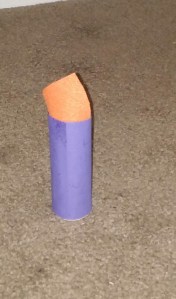
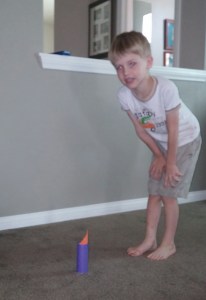
Physical Education Activities– Another nursery rhyme I used with the letter Q was “Jack Be Nimble, Jack Be Quick.” I made a “candlestick” out of a toilet paper roll, felt, and construction paper. Then I had the grands quickly jump over the candlestick several times.

Naturalist Intelligence (Nature Smart)

Quills and Quails-I showed my grandsons a Wild Kratts episode “Quillber’s Birthday President” which explained how porcupines shed their quills. We also watched some videos together about quails.

Nature Letters or Words-Making letters from natural items is always a good way to make a connection between the shape of the letter and a word that begins with the letter. So making the letter “Q” out of stones is a good activity for the naturalist intelligence. I had Tigger spell some “Q” words using a stick to scratch out the letters in the dirt.


Logical/Mathematical Intelligence (Number/Reasoning Smart)

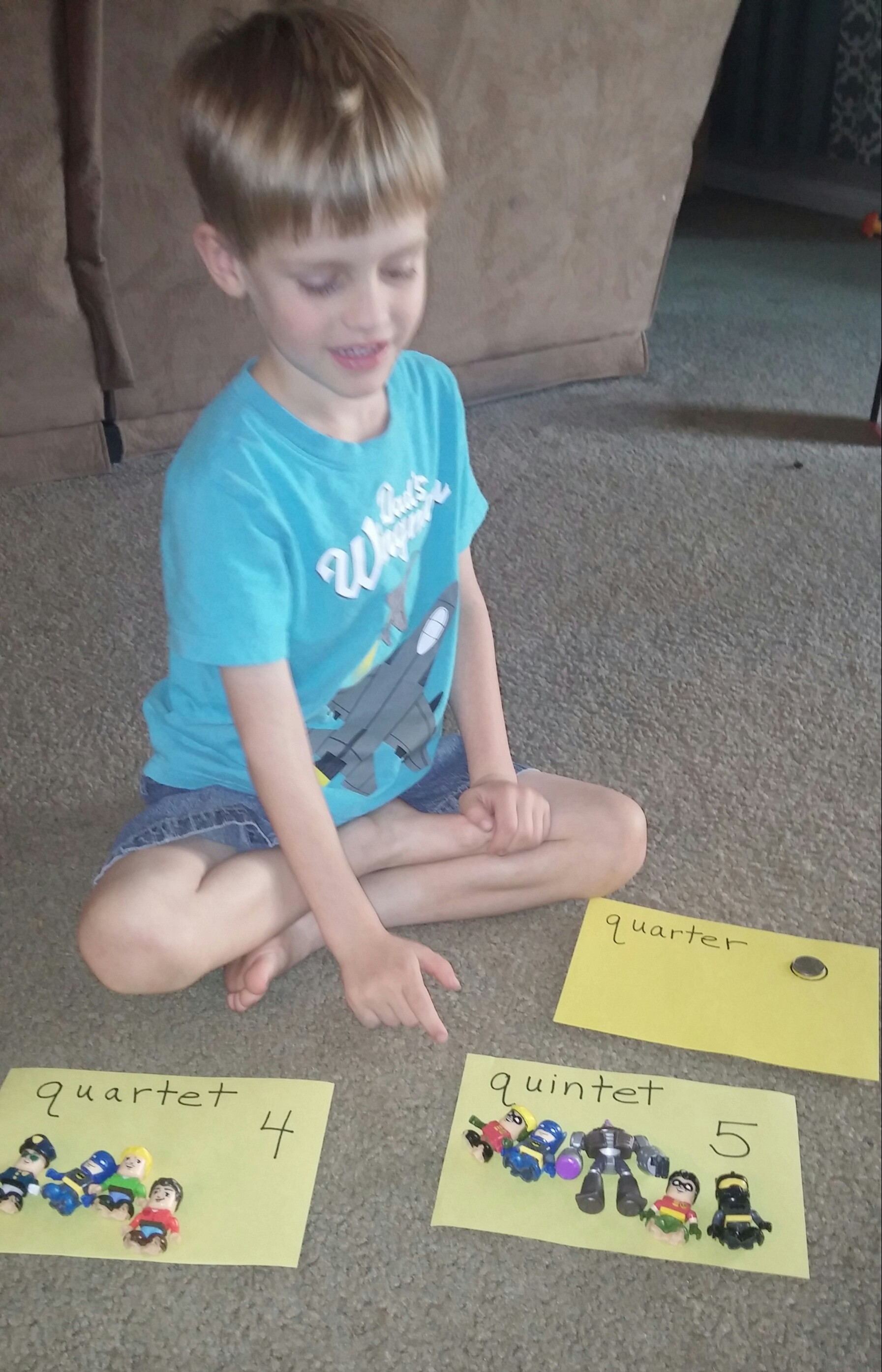
Counting activities: Quartets, Quintets, and Quarters, Oh My! I had the grands use their toys and a quarter to show the meaning of “quartet”, “quarter,” and “quintet.” 

Kona used toys and a real quarter to match the words with their meanings.

Kona used toys and a real quarter to match the words with their meanings.

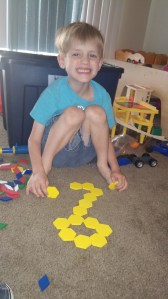
Pattern blocks: I had Kona make a capital “Q” with pattern blocks. Then he had to name all the shapes he used to make the letter. I had him do this several times using the different types of pattern blocks. 


Intrapersonal Intelligence (Self Smart)

Personal reading – I give the grands independent time to look at the books I mentioned in the Linguistic Intelligence. In fact, they love to curl up under a quilt as they read.

Favorite “Q” words – At the end of the unit, I asked the grands to tell me their favorite words that begin with the letter “q.” Kona told me his favorite “Q” words were “quintet” and “quiet.”


Musical Intelligence (Music Smart)

 Finger plays and songs-“The Queen of Hearts Made Some Tarts” and “Jack Be Nimble, Jack Be Quick” are two nursery rhymes that I used in this unit. We made gestures to go with the rhyme as we repeated it. Other songs created for the letter “Q” can be found online here:

http://childfun.com/index.php/alphabet/187-the-letter-q-activity-theme.html?start=4

Create your own finger plays or songs- I chose the melody from “Row Row, Row Your Boat” to create my own “Q” song for the grands. Here it is:

“Q, Q, Q for quail, Nesting on the ground. In the brush you’re eating seeds, and berries you have found.

Q, Q, Q for quick, You are much too fast. I can’t move at all like you, so in this race I’m last.

Q, Q, Q for quilt, Put it on your bed. You’ll be comfy underneath, ‘Night you sleepy head.”


Thanks for reading my blog. I hope these articles are helpful when you are planning learning activities for the children in your care.


4 Comments »

Library Lessons and the Letter L

It was time to work on the letter “L” and as I was looking for books to read to my grands for these lessons, I found several wonderful books about libraries.

That reminded me that I needed a way to help the grands learn about the libraries that they visit all the time. (And to help Tahoe, 2, to understand that the library was not really a racetrack with conveniently placed bookshelves as obstacles to keep Mimi from catching him.)

Another goal was to familiarize or expand the grands’ vocabulary with words that begin with the  “L” sound besides the word “library.” I brainstormed words that began with the  letter “L” and fun activities to help them understand and remember these words.

So I planned a study unit that combined activities connected with the letter L and libraries. As always, I planned a variety of lessons in each intelligence to have differentiated activities for each grandson: Tigger (6), Kona (4), and Tahoe (2). I try to do two intelligences each day, so this would be a four day unit.

I hope you are finding these Multiple Intelligence activities useful as you plan to introduce letters to the children in your care. If you would like to see more of these unit studies as I created them, you can become a follower of this blog.
Linguistic (Word Smart)

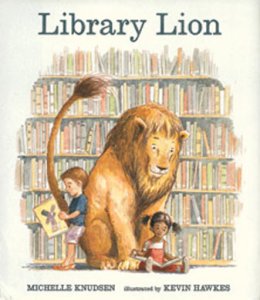
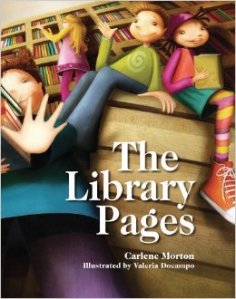
Read books-I chose two books in particular to be the basis of this study: The Library Pages by Carlene Morton and Valeria Docampo and Library Lion by Michelle Knudsen. Both books help teach the rules of the library, but in a really fun way. Tahoe and Kona especially loved Library Lion about a lion who tries to obey the rules in the library so he can stay for story time. (Just after I finished this unit with my grandsons, I discovered a great article about taking toddlers to the library from Growing Book By Book. Her article also includes a recommended book that works with this Study Unit. I’m going to check it out at the library!)

http://growingbookbybook.com/2013/03/04/5-tips-for-a-successful-trip-to-the-library-with-a-toddler/

Discussions-As we read Library Lion and Library Pages, we discussed the way the author explained the rules of a library in the story without making an actual list of rules.

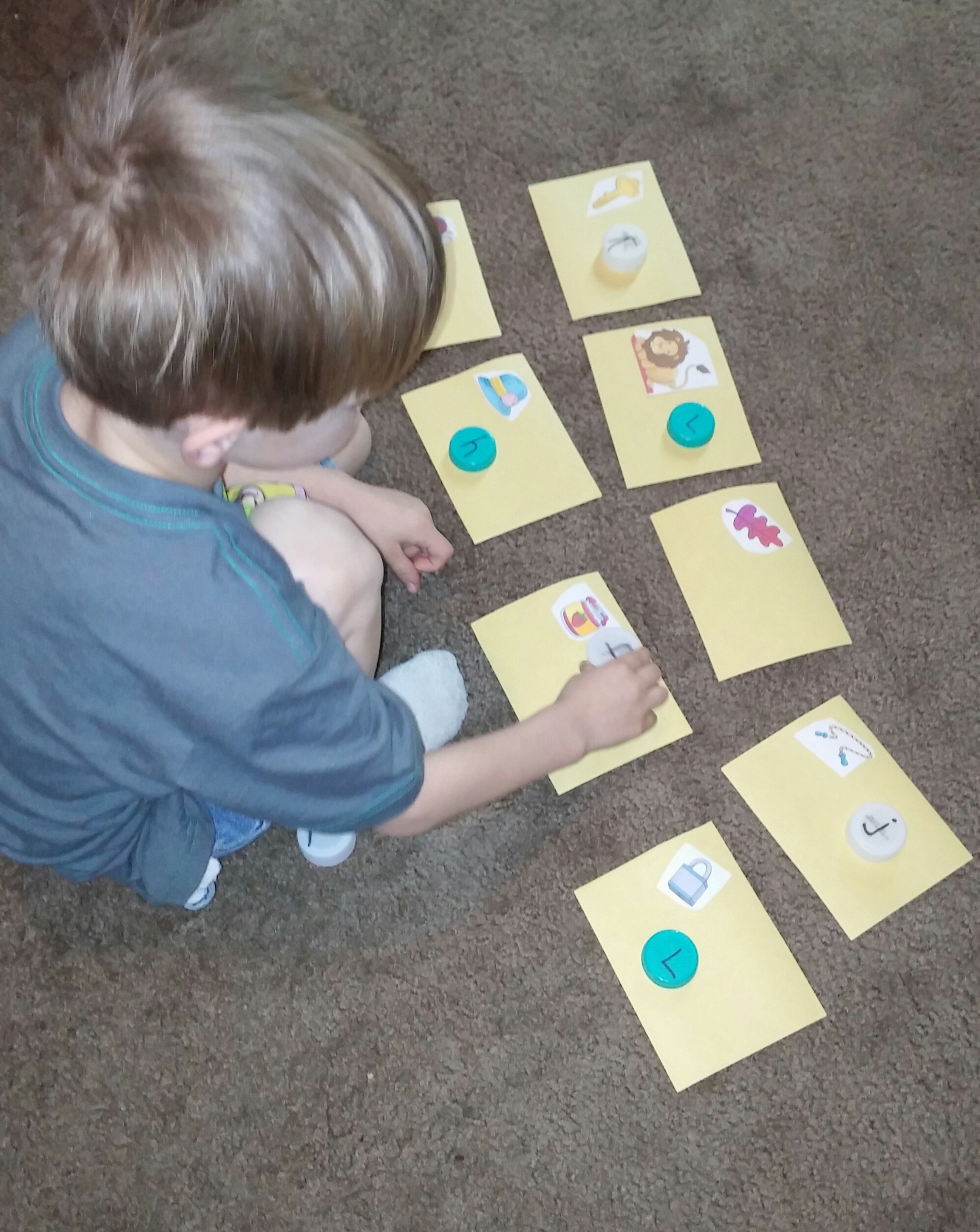
Matching  Pictures with Sounds-I have the grands match “bottle cap” letters of sounds we have been learning with picture cards. (To make the picture cards, I  use illustrations from the grands’ completed workbook and glue them on construction paper. I also save bottle caps from the gallon milk containers when they are empty and print letters on the bottle caps with a marker.  These are great ways to reuse items I already have on hand.)


Kona matches the letter of the beginning sound with the picture cards.

Kona matches the letter of the beginning sound with the picture cards.


Spatial Intelligence (Picture Smart)

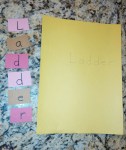
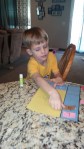
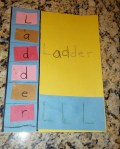
 Letter crafts-I used the word “ladder” as the topic of another craft project for the grands. As Kona worked on this project, he sounded out each letter in the word “ladder” separately. He can’t put the sounds together yet, but I was happy that he was understanding that each letter had its own separate sound.  I also wanted to work on Kona’s letter writing skills, so I had him trace some capital “L”s and trace the word ladder. To my surprise, two year old Tahoe also wanted to trace the letters and word on his project too.


Videos-I played several videos I found online that teach the sound of the letter “L” and had the grands repeat the sounds and words that began with the letter L during the second playing of the video for them.


   Interpersonal (People Smart)

Dramatic play-I love using dramatic play as a way to help the grands understand the stories I read to them. A fun activity is to have the grands pretend they are the characters in the book and act out the book with their siblings and/or adult. 

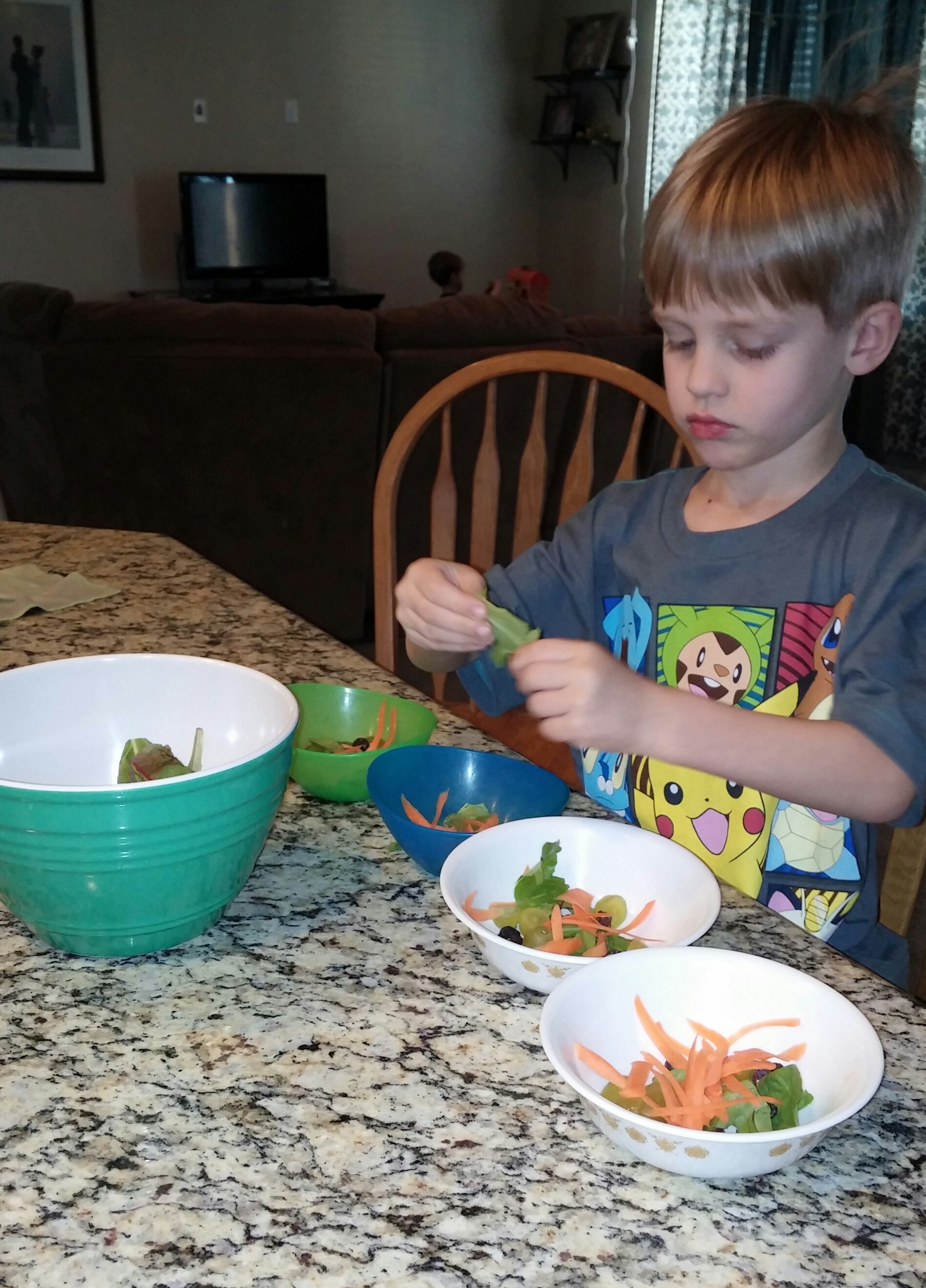
Cooking-I chose “lettuce” as the main ingredient of a simple salad that the grands help to create. They helped tear the lettuce and added some of their favorite salad ingredients (such as raisins, grapes and shredded carrots)  to it.

I loved the salad that Kona made for me from lettuce, grapes, carrots, and raisins.

I loved the salad that Kona made for me from lettuce, grapes, carrots, and raisins.

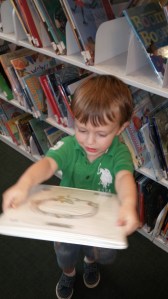
Storytime at the Library- Now that Tahoe is moving his nap time from morning to early afternoon, I was able to take him to a weekly story time at one of our local libraries. It was really crowded, but he did a great job staying with me on the rug, singing and dancing with the librarian, and responding to the stories she read to him. We didn’t stay for crafts (sooo crowded), but he enjoyed the session very much and I will make this a weekly activity for Tahoe.

Bodily-Kinesthetic (Body Smart)

Walking to the library-This will be a good activity for the grands as they get older. I walk to the one near my home all the time, but the distance is still too far for these little guys (and I don’t want to carry them).

Pantomimes- I put pictures/words that begin with the letter “L” on cards and together we practiced pantomimes for each of them. Then we played a game where the grandsons picked out a card without showing me, and then pantomimed the word or picture.

Legos-The grands love playing with legos anyway. Besides designing their own creations with the legos, I had them make the letter “L” out of legos.

Lacing Cards-Lacing cards are another activity I used during our unit on the letter “L.”

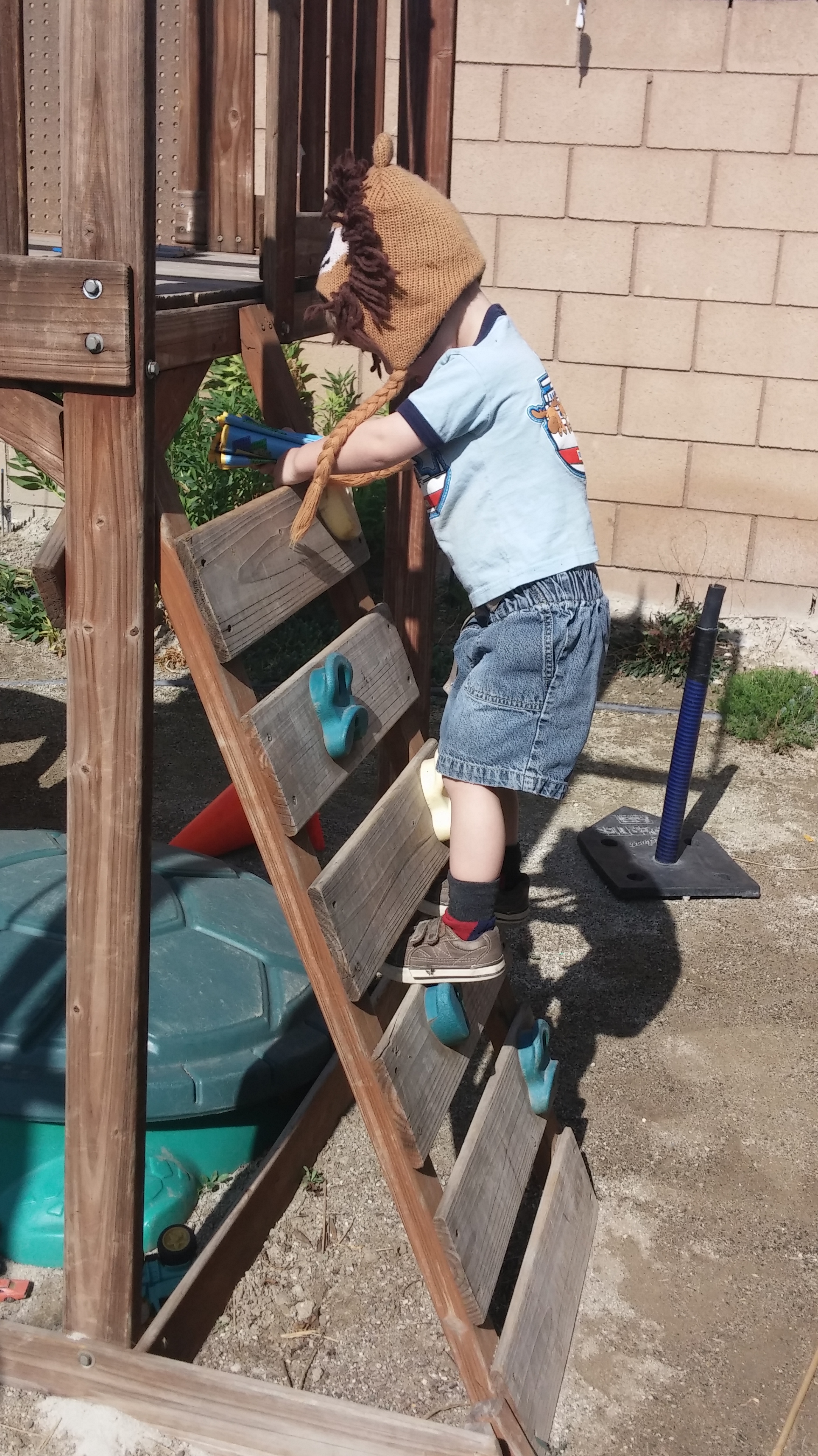
Physical Education ActivitiesI had the grands climb ladders in the backyard playset and on the equipment at the local park. 

Tahoe climbs ladders a lot, but now as he climbs I help him hear the "L" sound in ladder. (Yes, my grands love wearing silly hats when they play.)

Tahoe climbs ladders a lot, but now as he climbs I help him hear the “L” sound in ladder. (Yes, my grands love wearing silly hats when they play.)

Naturalist intelligence (Nature Smart)

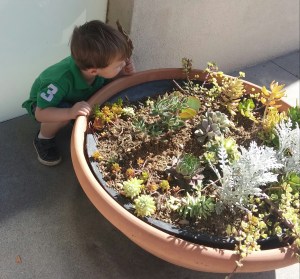
Field trips-Visiting the local library is always a good field trip. Many libraries have outdoor areas to enjoy. On our recent visit to a local library, Tahoe enjoyed the succulent garden at the entrance to the library. This particular library also had a “Reading Garden” so we investigated that too. Of course, visiting a lake would be another great field trip since  “lake” begins with the letter “L.”

Nature Letters-Making letters from natural items is always a good way to make a connection between the shape of the letter and a word that begins with the letter. So making the letter “L” out of leaves is a good activity for the naturalist intelligence.

Reading outside-It is amazing how pleasing it can be to take a library book outside and read it under a shady tree or near some fragrant roses. I used to take my class to the nearby park for an hour long reading session. We brought along blankets and beach chairs and made ourselves comfortable on the lawn by some trees. My students always thought this was a great treat!

Outdoor Scavenger Hunt-The grands always enjoy scavenger hunts, so either I give them picture cards of natural items that start with the letter “L” or we brainstorm ideas ahead of time. Then we look around the backyard or our neighborhood for these items. Some ideas for this activity are: lemons, lizards, ladybugs, leaves, lakes, and lavender plants.

Logical/Mathematical Intelligence (Number/Reasoning Smart)

Counting activities: Since my grandsons have so many books in their home library, I used these books in their counting activities. For Tahoe, we just counted the books on one shelf until we got to twenty. (He is still forgetting a few numbers as we count together from 11-20.) I asked Kona to count all of the books. He whined, “But it’s too much!”  I showed him how to put   books in groups of ten to make the counting easier. He really enjoyed doing that. Of course, he got sidetracked several times because he kept wanting to stop and have me read him one of the books. Overall, he really enjoyed this activity. This is a great activity for Tigger (6) too!

I asked Kona to count the number of books in the family room library. He made stacks of "ten" books and had six books left over. Then he counted the stacks by tens and added the six books. The final tally: 76 books

I asked Kona to count the number of books in the family room library. He made stacks of “ten” books and had six books left over. Then he counted the stacks by tens and added the six books. The final tally: 76 books

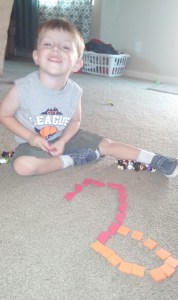
Pattern blocks: I had Kona make a capital “L” with pattern blocks. Then he had to name all the shapes he used to make the letter. I had him do this several times using the different types of pattern blocks. 

Intrapersonal Intelligence (Self Smart)

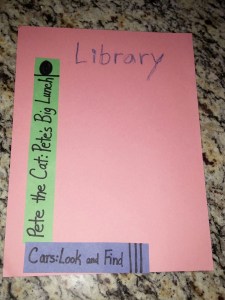
Personal reading – I wanted the grands to understand that they had several libraries in their own home. I had them choose two of books they enjoyed and we made a simple craft using the books’ titles that formed the letter “L.” Afterwards, Kona chose several books from the family room library to take aside to read. 

Exploration Bins-Putting together a collection of items that begin with the letter “L” is always a great intrapersonal activity.

Musical Intelligence (Music Smart)

 Finger plays and songs-It is easy to find songs for the letter “L” on the internet. On my own I thought about “Ladybug, Ladybug Fly Away Home,” “Mary Had a Little Lamb,” and “Lollipop, Lollipop, Oh Lolli-Lolli-Lolli.” I found other songs I liked on this website:

http://www.dltk-teach.com/alphabuddies/songs/l.htm

Create your own fingerplays or songs- I really wanted a song about a library so I created my own using the melody from “The Wheels of the Bus.” These are my first three verses, but I’m sure you could create many others:

The library has so many books, Many  books, Many  books, The library has so many books, I go there every week.

And when I’m there I talk softly, Talk softly, Talk softly, And when I’m there I talk softly, I go there every week.

I really enjoy the Story Time, Story Time, Story Time, I really enjoy the Story Time, I go there every week.


Thanks for reading my blog. I hope these articles are helpful when you are planning learning activities for the children in your care.

266-family-fun-friday-link-party-button1


9 Comments »

Big Snow – And Teaching the Letter S

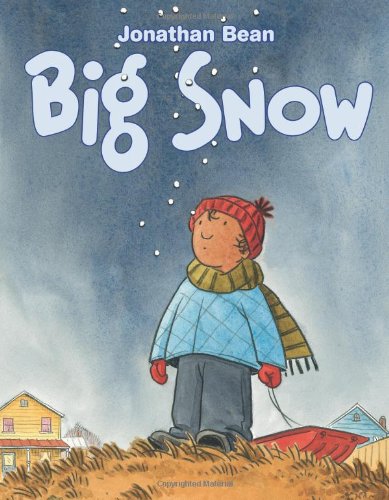
I love combining a book study unit with teaching a letter of the alphabet. We don’t get snow in the valley where we live, but even so, the grands enjoy learning about snow (and of course, snowmen). So, I developed a study unit on the book Big Snow by Jonathan Bean, and planned activities to teach the younger grands the letter S. 

Big Snow

This delightful book, published in 2013, describes the anticipation of David, a little boy, wanting to see “a big snow” in his neighborhood. I loved the way the mother in the story tried to keep him busy by helping her with chores, but unfortunately everything seems to remind David of snow. Even the dream during his nap is focused on shoveling large drifts of snow that accumulated in his home. When he awakes from his nap, his father has come home early from work, due to the snow.  The whole family dresses warmly to go out and explore all the snow that is now covering their neighborhood.

I have actually spent several weeks on this unit, mostly because the boys and I have taken turns recuperating from colds (or flu), but this would most likely be a four day unit otherwise. As always, I plan a variety of activities in each intelligence and choose the ones that best work for each grandson (Tigger 6, Kona 4, and Tahoe 2). If you use this study unit, I encourage you to use at least one activity from each intelligence.

Linguistic (Word Smart)

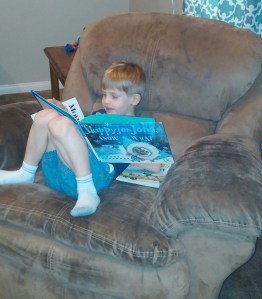
Reading- I have read Big Snow to each grandson several times. There is always a discussion of the pictures, new vocabulary, the sequence of events, and the letter S as I read to them.

Writing- Both Kona and Tigger love to type on my iPad, so as I read the story to each of them, they located words that begin with “S” and typed them. We read the words together afterwards. The youngest grand, Tahoe, traced the letter “S” in the air with my help.

Decoding – Tigger worked on decoding words that had s-blends (such as stop and slug) using this website:

http://www.progressivephonics.com/attachments/article/19/Int_Book_2_screen_version.pdf

 Spatial Intelligence (Picture Smart)

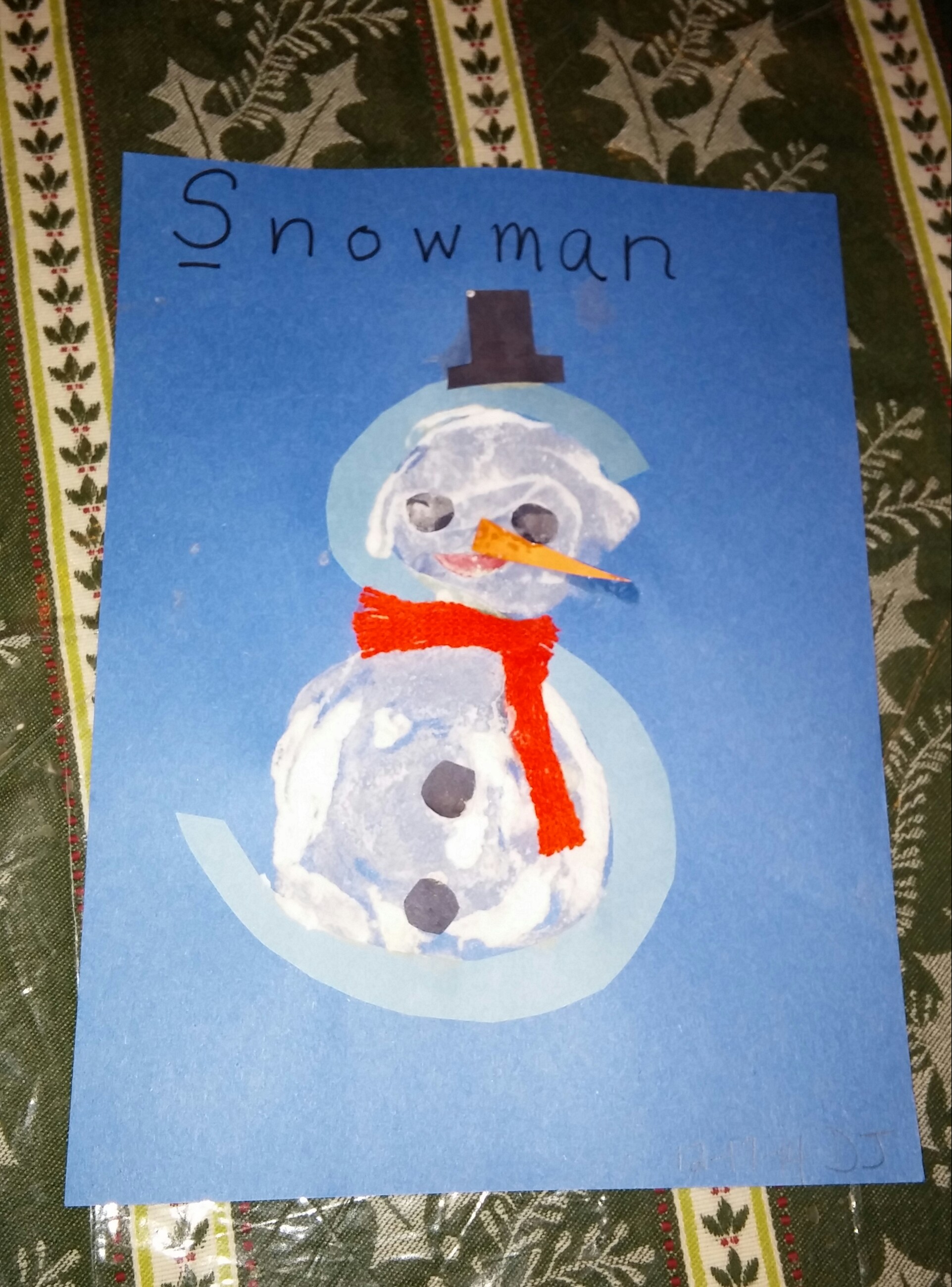
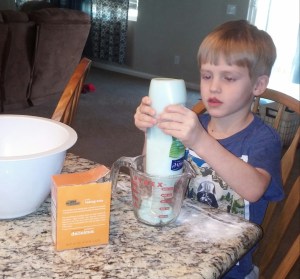
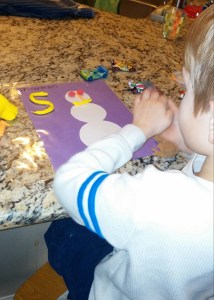
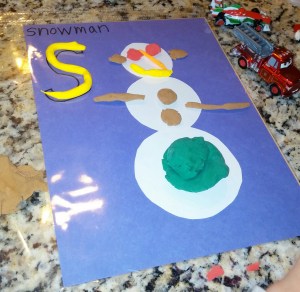
Letter crafts- (Snowman Craft)  I planned a simple craft project to use the letter “S” to make a snowman for the two younger grands. I cut out a letter S, some snowman face features, a hat, and some buttons from construction paper. I happened to have scraps of red yarn too which we used as the snowman’s scarf. First, to make the body of the snowman,  we glued the letter “S” to a piece of construction paper. Next I had the boys spread white glue to make two circles within the letter “S” and then had them sprinkle baking soda on top of the glue. After the glue and baking soda had dried, we gently shook off the excess baking soda. We decorated the snowmen with the construction pieces and yarn that I had prepare to complete the picture.(Snake Craft) I had Tahoe create a separate project as well. I cut a large letter “S” out of construction paper and had him trace it with his finger. I told him that “S” starts the word”Snake” and we made the sound a snake makes together. Then he used his dot paints and crayons to turn the “S” into a “Snake”.

Both Tahoe and Kona enjoyed making this snowman with the letter S.

Both Tahoe and Kona enjoyed making this snowman with the letter S.

Videos on Snow- I found several news videos online about the blizzard in New England (Jan. ’15) so I watched them with my older grandsons after reading the book Big Snow. (I always preview videos before showing them to my grandsons, and if necessary, we watch the videos with the audio turned off.) We discussed the similarities that we saw in the videos and the book.

Videos on Letter “S”- I also showed videos on the letter “S” to Kona and Tahoe that I found online. They are so many of these videos available and they are easy to find, so I won’t share the links we used.

   Interpersonal (People Smart)

Dramatic play – After reading the story several times to the grands, we reenacted  the story using dramatic play and any props that were laying around the area where we played.

Cooking – Since my grandsons are still young enough to need lots of supervision during cooking activities, I have placed this activity under Interpersonal. It could go under Logical/Mathematical (for measuring) or Linguistic (for reading directions) as well for older children. I chose two recipes to share with my readers. Since the main character in the book starts making oatmeal raisin cookies, I would use this recipe if my grandsons weren’t on a gluten free diet right now. http://allrecipes.com/Recipe/Oatmeal-Raisin-Cookies-I/

For a gluten free version, I planned to do this recipe: http://kitchensimplicity.com/oatmeal-chocolate-chip-raisin-cookies/

Games- “Snowball Fight” Since we didn’t have real snowballs, the grands and I used rolled up socks as snowballs.

 Bodily-Kinesthetic (Body Smart)

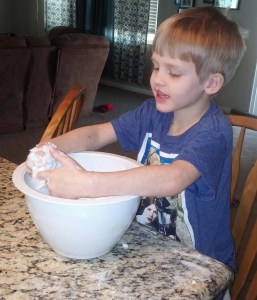
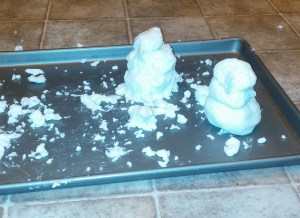
Pretend Snow- Since we don’t get our own snow, we have to make “Pretend Snow” instead. I found an easy recipe at this link (although we didn’t add glitter or lavendar oil to our version.)

 http://www.raisinglifelonglearners.com/snow-dough-science/

Cleaning House- Part of the story Big Snow, includes David attempting to help his mother with household chores (changing the sheets and cleaning the bathroom) to take his mind off the snow that was coming down outside. You might not be able to do this in a classroom, (although you could pantomime these activities), but since I watch the grands in their own home, it is a wonderful activity for us. As you work together, discuss items you are using that begin with the letter “S”, such as suds, spray bottle, soap, etc.

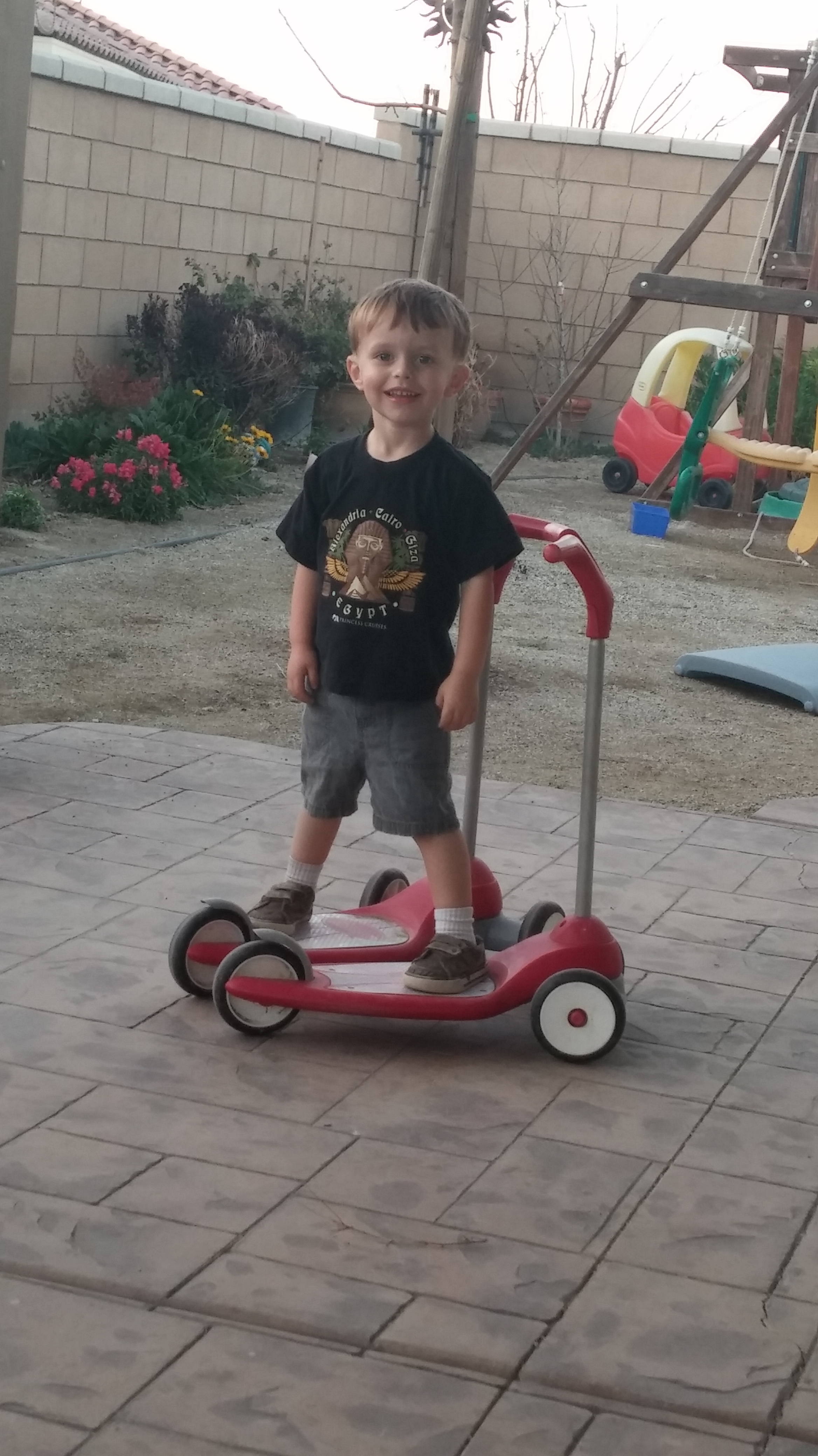
Playing with Scooters-While I’m not sure you can ride on scooters in the snow, I remind my grandsons that “scooter” begins with the sound of “S” as they play with them. Kona and Tigger love to race each other in their scooters, while Tahoe thinks it is fun to try to balance on two scooters at the same time.

Tahoe loves trying to balance on two scooters.

Tahoe loves trying to balance on two scooters.

Winter Clothing Race- In the story Big Snow, David keeps going outside to check on the snow. Each time he leaves the house he has to put on his jacket, scarf, hat, and mittens. I designed a race for Tigger and Kona where I left pieces of their winter clothing around the great room in their house, and they had to race to collect each piece and then put them all on.

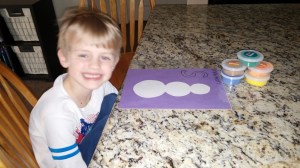
Playdough mats- I created my own playdough mat of the Letter S and a snowman for Tahoe and Kona to practice the formation of the letter S and to create their own snowmen with playdough.

 Naturalist intelligence (Nature Smart)

Field trips– If it doesn’t snow where you live, you may be able to take a field trip to a place that does have snow so they can experience and play in the real thing. 

Nature Letters- I took the grands outside and had them make the letter “S” out of natural materials they had found in the yard.

Outdoor Scavenger Hunt– I either make a list or take picture cards of some items  that we might find outside that begin with the letter “S” such as sticks, stones, sand, stars, saplings, sun, or sunshine.

Logical/Mathematical Intelligence (Number/Reasoning Smart)

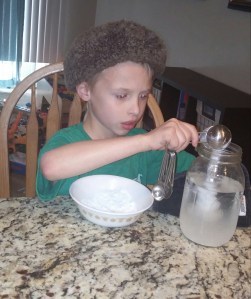
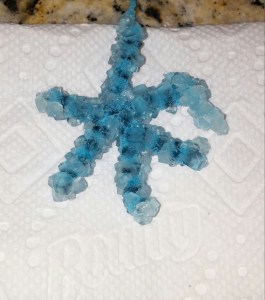
Counting activities: Tigger worked on a “snowflake” activity which required him to use his counting and measuring skills. He had to create a six sided snowflake with pipe cleaners, count the number of cups of boiling water I poured into a mason jar (3), add nine tablespoons of Borax to the water, and place three drops of blue food coloring in the liquid before stirring. The complete directions for this fun activity can be found here:

http://pagingfunmums.com/2015/01/23/grow-frozen-themed-snowflakes/

Measuring: One of the towns in Massachusetts had 36 inches of snow. I had Kona and Tigger measure 36 inches pieces of construction paper that were taped together and then attached the measured paper to the wall so the grands could easily visualize how much snow had fallen during the blizzard.

 Intrapersonal Intelligence (Self Smart)

Independent reading– I always allow time for the grands to look over the book we are studying on their own. 

Exploration– Since we don’t get “real snow” where we live, I kept the “Pretend Snow” (explained under Bodily-Kinesthetic) in the refrigerator. The boys were able to take it out and play with it on their own. (Tahoe wouldn’t play with it though. He said it was too cold.)

Musical Intelligence (Music Smart)

Finger plays and songs- “Frosty the Snowman”or “Susy Snowflake”  can be sung all during the winter season. The lyrics can be found online. “Five Little Snowmen” is a cute finger play and can be found at this link:

http://wiki.kcls.org/index.php/Five_Little_Snowmen

Listening to classical music-Play Vivaldi’s “Winter” from the Four Seasons Symphony while you have a snowball fight (listed under Interpersonal Intelligence). Or listen to “Waltz of the Snowflakes” from Tchaikovsky’s The Nutcracker while making “Pretend Snow” (see Bodily-Kinesthetic Intelligence).

thank-you-clipart-thank-you-flower

I hope you are enjoying my lesson plans using Multiple Intelligence strategies, and finding some ideas that will work for the children in your care. If you are interested in seeing more of my lesson plans,  please sign up to follow my blog.


I love to add my blog posts to link parties such as:

3 Comments »

Creating A Multiple Intelligences Lesson Plan

With the start of the new year, I know many of you are going back to planning lessons for the children in your care. Whether you’re a classroom teacher, a homeschooler, a Sunday School teacher, a caregiver, or an afterschooler, I’m sure you always try to plan lessons that will create lifelong learners among the beautiful minds that you teach.

And since I am a big advocate of Howard Gardner’s Theory of Multiple Intelligences, I highly encourage anyone who writes such lesson plans to include multiple intelligence strategies to ensure that every child in your care has an opportunity to be taught to his/her strengths. If you would like to see some sample study units I have created using Multiple Intelligences, I have placed some blog links at the end of this post.

While I have created and posted several lesson plans/study units that I have used with my young grandsons over the past years, I certainly have not covered all the topics that you may be covering in your classroom or home. So this may be a good time to explain how any lesson planner can easily incorporate multiple intelligence strategies when planning and implementing a unit of study for children.

I also recognize that many of you use a curriculum that has been purchased that includes textbooks and worksheets. You do not have to abandon these resources in order to use multiple intelligences. In fact, many publishers do include multiple intelligence activities in their unit plans, although they might not be part of the “basic” lesson plan, but listed under Extension, Enrichment, or Differentiation sections of the teacher’s resource book (so you may have to look for the multiple intelligence ideas).

Think about lesson planning as though you are creating a “learning buffet” for children. While it may seem easier to just use the “basic meat and potatoes” textbook and worksheets with the children under your care,  keep in mind that many worksheets are written to engage the learner in the lower levels of Bloom’s Taxonomy (with no interesting seasonings, gravies, or sauces). So even if a child really likes to do worksheets, they may not get enough higher level thinking skills if worksheets are the “main course” for the “learning buffet” that is provided to them. I try to keep that in mind if I decide to offer worksheets to  my grandsons. (Actually my grandsons’ school and preschool give them worksheets for homework, so I prefer to whet their “learning appetites” with more savory fare anyway.) Using multiple intelligence strategies can be part of the “main course” as well, but think of these activities also as the other foods you would find at a buffet: the appetizers, salads, side dishes, and desserts. Don’t leave these off your plate…I mean lesson plans.

To make adding multiple intelligences to your lesson plans as easy as possible, I have created a handy guide and listed a variety of ideas for each intelligence. While these lists are certainly not exhaustive, they have several activities under each intelligence that I liked to use in my classroom or with my grandsons. Choose and adapt at least one activity from each intelligence to use during your unit of study. In addition, keep in mind that some activities could be categorized under several intelligences. For example, writing a reflection in a journal would be both an intrapersonal and linguistic activity. Using crayons when writing spelling words would be using both the linguistic and spatial intelligences.

While it is possible to use all eight intelligences in just one lesson, you will probably be choosing to spread out your unit of study over several days. If you happen to read any of my previous posts on study units, I usually plan them for 4-8 days, depending on the topic of course. So plan away….

Linguistic (Word Smart)

  • Read Textbooks or other Books-This includes reading aloud, reading silently, group readings, guided reading, choral reading, etc.
  • Audio Books-Listening is an important linguistic skill, so I always keep an audiobook in my car for myself and for the grands since I end up doing a lot of driving with them. Listening to audiobooks  helps children learn about expressive reading. Many textbooks have audio versions which can be very useful. I get most of my audiobooks from the library for the grands.
  • Discussions-Speaking is part of the linguistic intelligence, whether you’re discussing the pictures on the pages of the book, vocabulary, or main ideas. At the school where I worked (before retirement), all the teachers had a poster on their walls with Bloom’s Taxonomy questions that could be adapted to pretty much any reading. For more information, start with this link: http://www.bloomstaxonomy.org/Blooms%20Taxonomy%20questions.pdf
  • Bottle Caps, Letter Stamps, Magnetic Alphabet Letters, or Dry Erase Boards-I like to use hands on materials other than pencil and paper to engage my grandsons in linguistic activities.
  • Make Lists-Some ideas of lists would include: main characters, main events, words that rhyme, sight words from the story, new words in the story, questions to explore, etc.
  • Word Puzzles-I purchased some wooden word puzzles for my grandsons, but for older children crosswords and word searches are lots of fun. Find them on the Internet or create your own.
  • Writing-I think some sort of daily writing is very important, whether you write a story with the children, model how to use their new vocabulary in sentences, give the children a story starter, have them answer questions in writing, or give them time to write in a journal.

Spatial Intelligence (Picture Smart)

  • Crafts-Related art activities are always on the lesson plans I create for my grandsons.
  • Videos-There are some amazing videos that can be found on the Internet, library, or other sources to go with your curriculum. (I always preview them before showing them to students or my grandsons.) 
  • Graphic Organizers-The most common graphic organizer is the Venn Diagram, but there are so many more great ones to use. Children can use them with you during discussions or as a way to organize their thoughts. Here is a link with several samples of useful graphic organizers:           http://www.eduplace.com/graphicorganizer/
  • Taking notes with Color-Both you and your students can use crayons, colored pens or pencils, markers, or highlighters when taking notes during lessons or reviewing key points. Using colored writing instruments is also a great way to practice spelling words.
  • Drawing Pictures-This isn’t just an activity for students who can’t yet express themselves in writing, but a valuable tool to help your spatial learners remember vocabulary, science concepts, and to help understand math word problems.
  • Picture Cards-Many purchased curriculums include picture cards, and you can also make your own. They have so many uses. They can be part of an exploration bin (see Intrapersonal Intelligence), used as flash cards or to create stories, hidden as part of a Treasure Hunt or Scavenger Hunt (see Bodily-Kinesthetic Intelligence), or used as you read books aloud together.
  • Playdough Mats- Since I have young grandsons, I use this activity a lot. They love to play with this material anyway, plus it is useful in developing their fine motor control (so this activity could also be considered under the bodily-kinesthetic intelligence).
  • Maps, Puzzles, Tangrams, Number Lines, and Timelines-These are great spatial activities, especially for social studies and math. Some schools have painted maps, planets, and number lines on their playgrounds. So even during recess, the students are practicing their learning while they play. When I taught, we had a world map painted on our school playground. While studying explorers, I would give my students some sidewalk chalk, and they would trace the explorers’ routes on the outdoor map. If you homeschool, you may be able to use chalk to make a number line on your driveway. I used number lines a lot with my class to teach addition and subtraction of negative and positive numbers.
  • Realia-These are “actual” artifacts of the topic you are studying. For example, if you are studying the short sound of the letter “a” then you might have apples, apricots, and “toy” alligators around as part of your lesson.
  • Experiments-You don’t have to do experiments just when you are teaching a science lesson. For example, if you are reading “The Long Winter” by Laura Ingalls Wilder, why not add depth to your children’s understanding of the book with some ice or weather experiments?

    Interpersonal (People Smart)

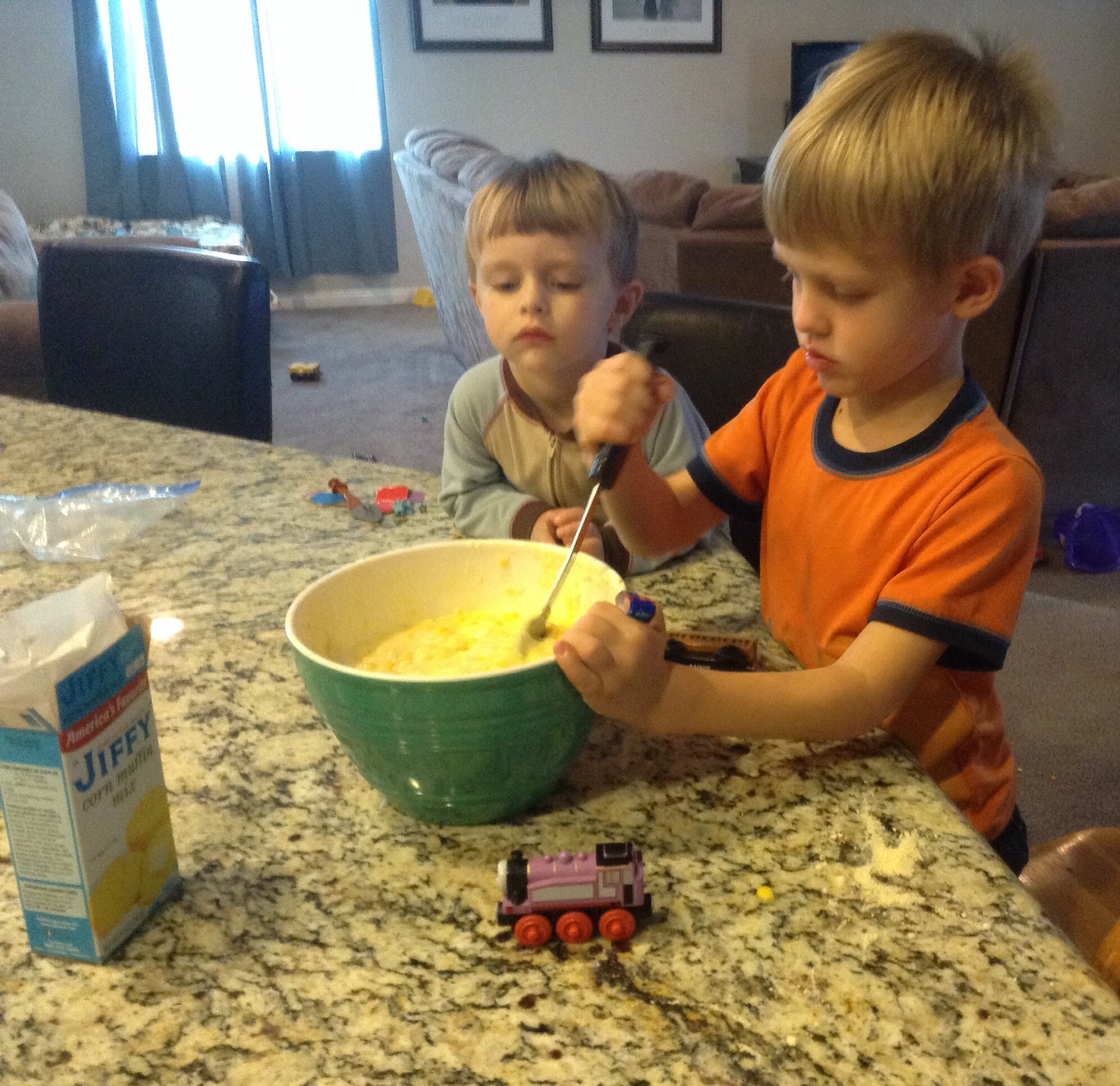
My grandsons love to cook with me.

My grandsons love to cook with me.

  • Dramatic Play-This can be as simple as letting children make up their own stories with the toys in an exploration bin, or as involved as allowing children to create their own small plays based on a topic given by the teacher. When I taught in the classroom, this was always a favorite activity with my students. Whether they were creating their own skits using their new vocabulary words, or depicting a scene from their social studies book, they always loved to form groups, rehearse, and present their skits to the rest of the class. While props and costumes aren’t necessary, my students usually begged for more time to make props and simple costumes as well.
  • Cooking-Since I am now teaching my young grandsons in their home and they need a lot of supervision to cook, this is a group activity and can involve recipes requiring a stove or oven. When I taught in the classroom, I did not have access to a stove or an oven. Since my students were in the fourth or fifth grade, they were responsible for following the steps of a simple recipe, so it was more of a linguistic and logical/mathematical activity.
  • Games-Any type of educational game that uses two or more people would fit into this intelligence. They could be as simple as guessing games like 21 Questions or an actual purchased game. I often had my fourth and fifth graders create their own board games to help review for a test.
  • Elbow Partners-If you have more than one child that you teach, you may have them work with a partner during the lesson. For example, they might be creating a project together or reviewing the lesson with each other during or after a lesson. (An “elbow” partner would be the person sitting next to you.) When I taught fourth and fifth graders, I frequently would include opportunities during the lesson for my students to turn to their elbow partner to review what I had just covered with them (meaning of the vocabulary words, steps in a math problem, main idea of a section in the social studies book).

Bodily-Kinesthetic (Body Smart)

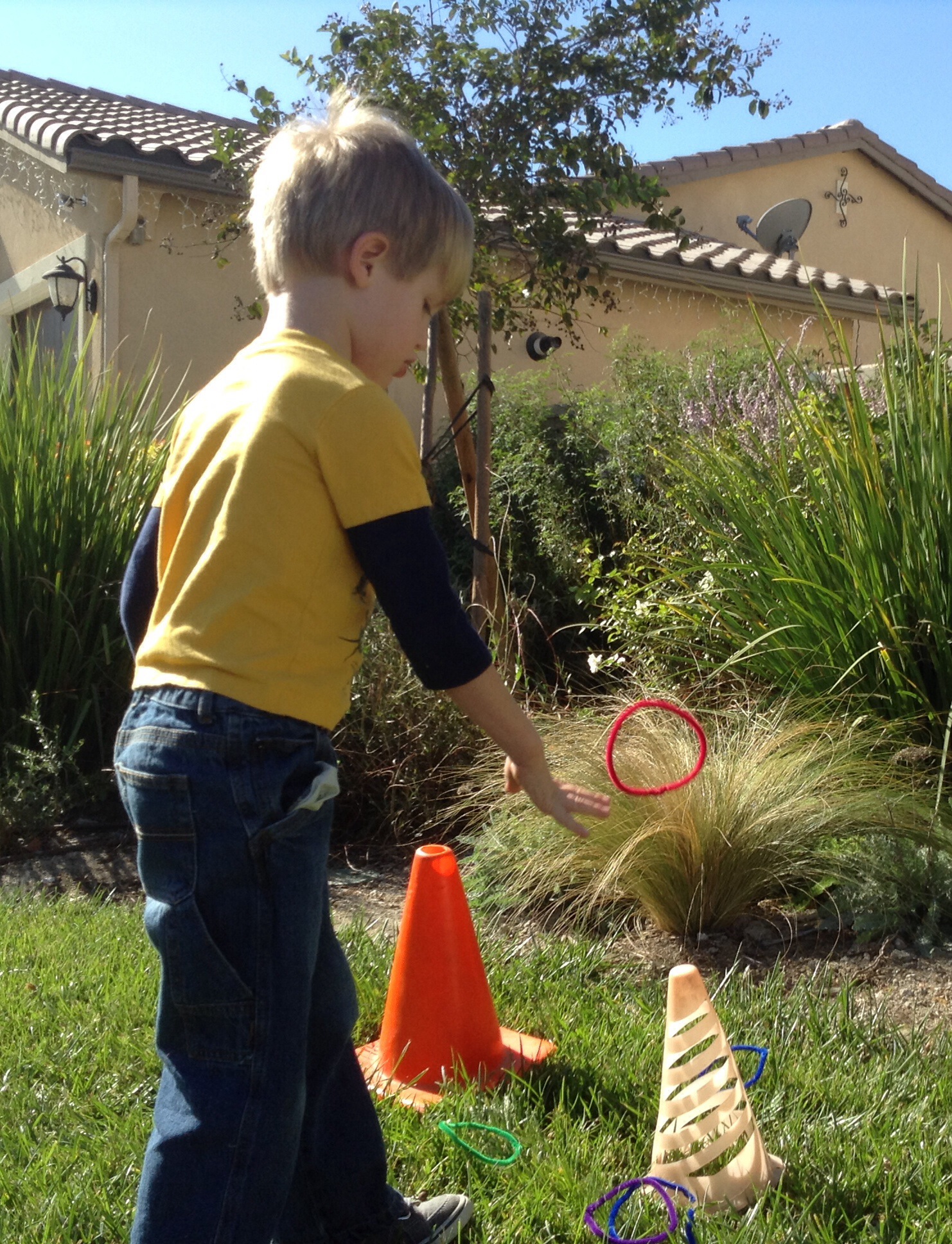
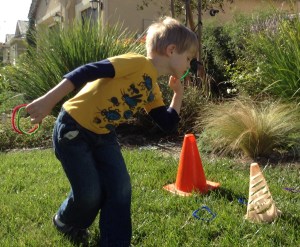
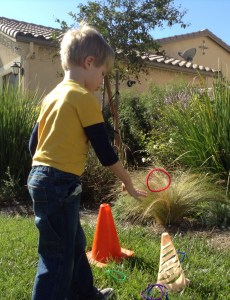
When studying the letter R, Kona had to say a word with the "r" sound before he could toss a ring over a cone.

When studying the letter R, Kona had to say a word with the “r” sound before he could toss a ring over a cone.

  • Responding with Movement-During lessons in my classroom, I liked to do plenty of review and I wanted all the students to respond. So instead of having students say their answers or writing them down on paper, I would have them respond with movement. For example, I would use true or false statements to check their understanding of the content in science or social studies; I would have them jump up and down for true statements, and turn in a circle for false statements. If I was checking their understanding of prime numbers, I would have them stamp their feet if I called out a prime number, and wave their arms if I called out a composite number. There are many ways to adapt this concept to the topic of your lesson.
  • Pantomimes-I love using pantomimes with students. I used them a lot in my classroom when I taught vocabulary or steps in a math problem. It is amazing how much this helped my students remember new words and math formulas.
  • Scavenger Hunts-Help your children become more observant while getting a chance to move around by frequently using scavenger hunts. Pick a topic “looking for things around the house that have circles” or use picture cards to locate items that match what you are studying. (If you do this activity outside, you are also adding the naturalist intelligence.)
  • Learning while Exercising-When doing jumping jacks with the children, think of other ways to count besides from one to ten. I had my students practice their multiples by counting by twos, fives, even sevens while they exercised. Our physical education teacher had them count their exercises in whatever world language they were studying in the classroom. If you play games such as “Steal the Bacon” you can use vocabulary words instead of numbers and then students get to run to get the flag when they hear their definition.
  • Indoor Treasure Hunts-Hide some items of “realia” around the house or yard and give hints to help them find them. It could be as simple as saying “You’re getting warmer” or as complex as a treasure map with hidden clues.

Naturalist intelligence (Nature Smart)

  • Field Trips-Leaving the confines of your classroom or home can be very motivating. You don’t have to visit a museum or fire station to consider it a “field trip”. My class loved going to a nearby park with their sketching pads or reading books. 
  • Using Natural Materials-Use items found in nature for art projects,  making the shapes of letters, or just for sensory lessons.
  • Observing Nature-Draw pictures of clouds and flowers, do bark tracings, take along magnifying glasses and binoculars to get “close and personal” with nature.
  • Outdoor Scavenger Hunt-This is similar to the Indoor Scavenger Hunt, but done outside in your backyard, neighborhood, or local park.
  • Gardening-This activity is great for science lessons (how plants grow), health (growing new foods to introduce into their diet), fine motor control (digging and weeding), math (counting petals, categorizing leaves), and even social studies (growing plants from different continents).
  • Teaching Outdoors-Just move your “classroom” outside. Use a blanket for chairs and take any lesson which doesn’t require a lot of supplies to a location on a grassy knoll or under a tree. I visited a school that had actually designated a large tree in their playground as the “Poet-tree” and had small benches underneath it. You wouldn’t have to use this space just for reading or reciting poetry, although that would definitely be a fun activity for it.

Logical/Mathematical Intelligence (Number/Reasoning Smart)

Tahoe was eager to use his pattern blocks on pre-made mats to make Nativity scenes.

Tahoe was eager to use his pattern blocks on pre-made mats to make Nativity scenes.

  • Counting Activities: For younger children, counting is always a great activity whether you are counting the pictures on the page of a book, the number of sides on an octagon, or the letters in a word.
  • Measuring:Besides measuring any artifacts (realia) that you may be using as part of your studies, you can find the measurements of animals, airplanes, distance between planets, etc. on the Internet. For example, are you studying explorers? Take a meter or yardstick outside along with some sidewalk chalk, and measure the length of the deck one of their ships. http://www.thenina.com/
  • Shape Search-Look for a particular shape in your environment or use pattern blocks to make pictures of topic related items.
  • Creating Word Problems-One of the easiest ways to incorporate this intelligence into your lesson plans would be to create word problems for the topic you are studying. For example, “The deck length of the Pinta was 85 feet, while the deck length of the Nina was 65 feet. Which ship had the longer deck length and by how much?”
  • Finding Patterns-This doesn’t just mean mathematical patterns (such as red square, green square, red square, green square, etc.) but can be related to any pattern. For example, the water cycle is a pattern, human behavior can follow a pattern, the seasons follow a pattern, and so forth…

Intrapersonal Intelligence (Self Smart)

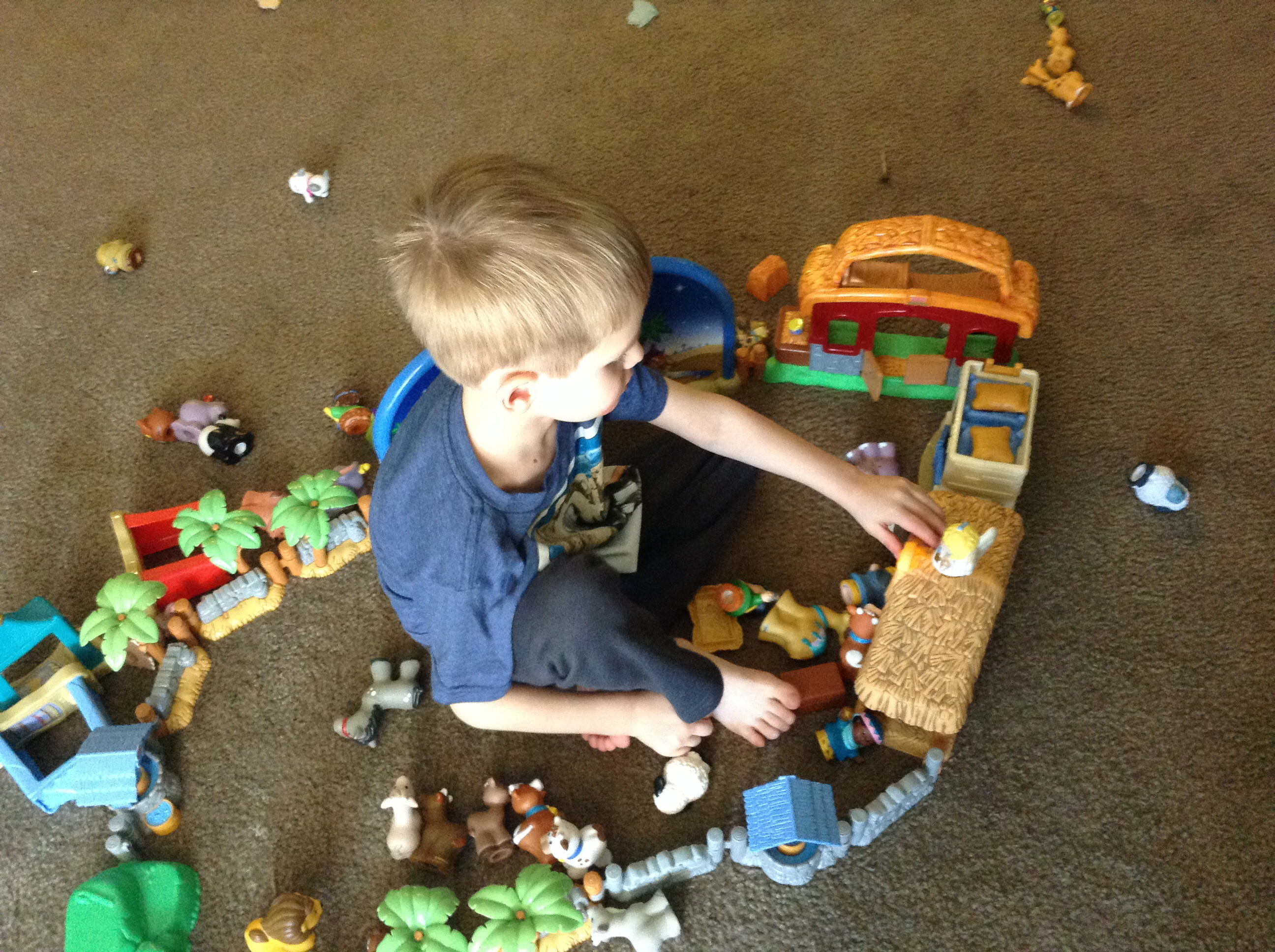
Allowing children an opportunity to explore with materials on their own is a great learning experience for them. Kona enjoyed playing with the nativity set by himself.

Allowing children an opportunity to explore with materials on their own is a great learning experience for them. Kona enjoyed playing with the nativity set by himself.

  • Independent Reading-Reading books, magazines, or Internet articles related to the topic you are studying is just one way children can use their intrapersonal intelligence.
  • Exploration Bins-Gather together books and artifacts (realia) related to the topic and keep them in a bin or bookshelf. Allow the children time to investigate and explore these items by themselves during their free time.
  • Computer Apps-I am always looking for good educational apps for my grands to use as part of their intrapersonal time.
  • Reflections-After a lesson or unit of study, it is very useful to have the children reflect on it. You can either ask the children what they learned and/or how they could apply it to life. This could be done orally or the children could write/draw pictures in a journal.

Musical Intelligence (Music Smart)

  •  Fingerplays and Songs-Finding fingerplays, songs, or chants that will follow the topic you are studying is a useful activity. (Most children remember the order of the alphabet by singing the “ABC Song”.)
  • Create your own Fingerplays, Songs, or Chants-If you can’t find fingerplays, songs, or chants that are related to your topic, they can be created by you or the students. I usually incorporate familiar tunes when I create my songs, but there is no reason why you couldn’t use original compositions as well. Many of my students would write the best lyrics!
  • Listening to Music/Songs-Another way to incorporate the musical intelligence is to find music that relates to your topic. For example, use Vivaldi’s “The Four Seasons” when you teach about the seasons or Gustav Holst’s “The Planets” when teaching astronomy.
  • Background Music-Just listening to music while you are working on some other activity can be beneficial. I’m sure you already play music while working on art projects, so why not try it during other subjects? In my classroom, students enjoyed listening to some soft Spanish guitar music while doing their math problems.  Another great time to use music is during transition time between subjects. Put on some peppy band music or dance tunes while they put away their math manipulatives or art supplies, and the rhythm of the music will make these tasks more enjoyable. (Listening to my favorite rock songs certainly invigorates me when I do housework.)


There are so many other ideas I could mention in this guide, but I hope you will find this post useful when creating your own units of study. In the upcoming months I will continue to post lesson plans I have created for my grandsons. My wish is that these posts will stimulate your creative juices when designing engaging lessons for the children in your care.

I hope you are finding these Multiple Intelligence activities useful as you plan lessons for children in your care. If you would like to see how I have used Multiple Intelligences to plan study units for my grandsons, here are some samples:

https://mimiandthegrands.com/2019/01/24/teaching-multiplication-tables-with-multiple-intelligences/

https://mimiandthegrands.com/2019/04/08/the-sun-and-solar-system-multiple-intelligence-unit/

https://mimiandthegrands.com/2014/10/18/teaching-short-vowels-the-m-i-way/

https://mimiandthegrands.com/2016/05/23/in-home-day-camp-week-1-ice-cream-dreams/

If you would like to see more of these unit studies as I create them, you can become a follower of this blog.
thank-you-clipart-thank-you-flower

I love to add my blog posts to link parties such as:


7 Comments »

B is for Bethlehem – Book Study

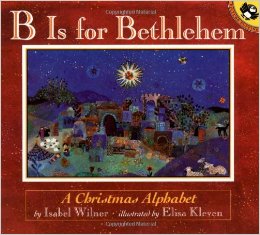
During the Christmas season, I wanted to plan lessons using a book that would not only tell the story of the birth of Jesus, but also teach academic skills. I found such a book in B is for Bethlehem by Isabel Wilner. With beautiful illustrations and rhymes, the author gives the reader some very important details about the events surrounding His birth.

B is for Bethlehem_I created this plan as an eight day study unit. I read the book aloud to my grandsons each day, and chose one other activity from the plan, making sure by the end of the study unit my grandsons has done one activity from each intelligence.  Additionally I planned differentiated lessons based on each grandchild’s needs:

Tigger (6) would be able to read many of the words, recognize the rhymes, and would benefit from the higher level vocabulary used in the story. My goal for Tigger would be increased comprehension of the events that led up to the birth of Jesus.

Kona (4) already recognizes all the alphabet and most alphabet sounds. His literacy lessons would focus on discussing the rhyming words and being able to explain at least four details from the book.

Tahoe (2) is still learning his letters, so I would focus on the letters B (Bethlehem) and J (Jesus). He should also be able to tell me the names of the main characters when I point to their pictures.

Linguistic Intelligence/Word Smart

  • Read the book aloud to the grands each day of the study unit.
  • In subsequent readings, discuss the alphabet letters, letter sounds, familiar words, new vocabulary, characters, setting, and main events of the book depending on the readiness and literacy goals of each child (grandsons, in my case).
  • Each page has two rhyming words, so discuss and/or write down some of these rhyming pairs. Kona and I discussed the words that rhymed on each page. For Tigger I copied a few rhyming pairs on paper, and had him match them up afterwards.
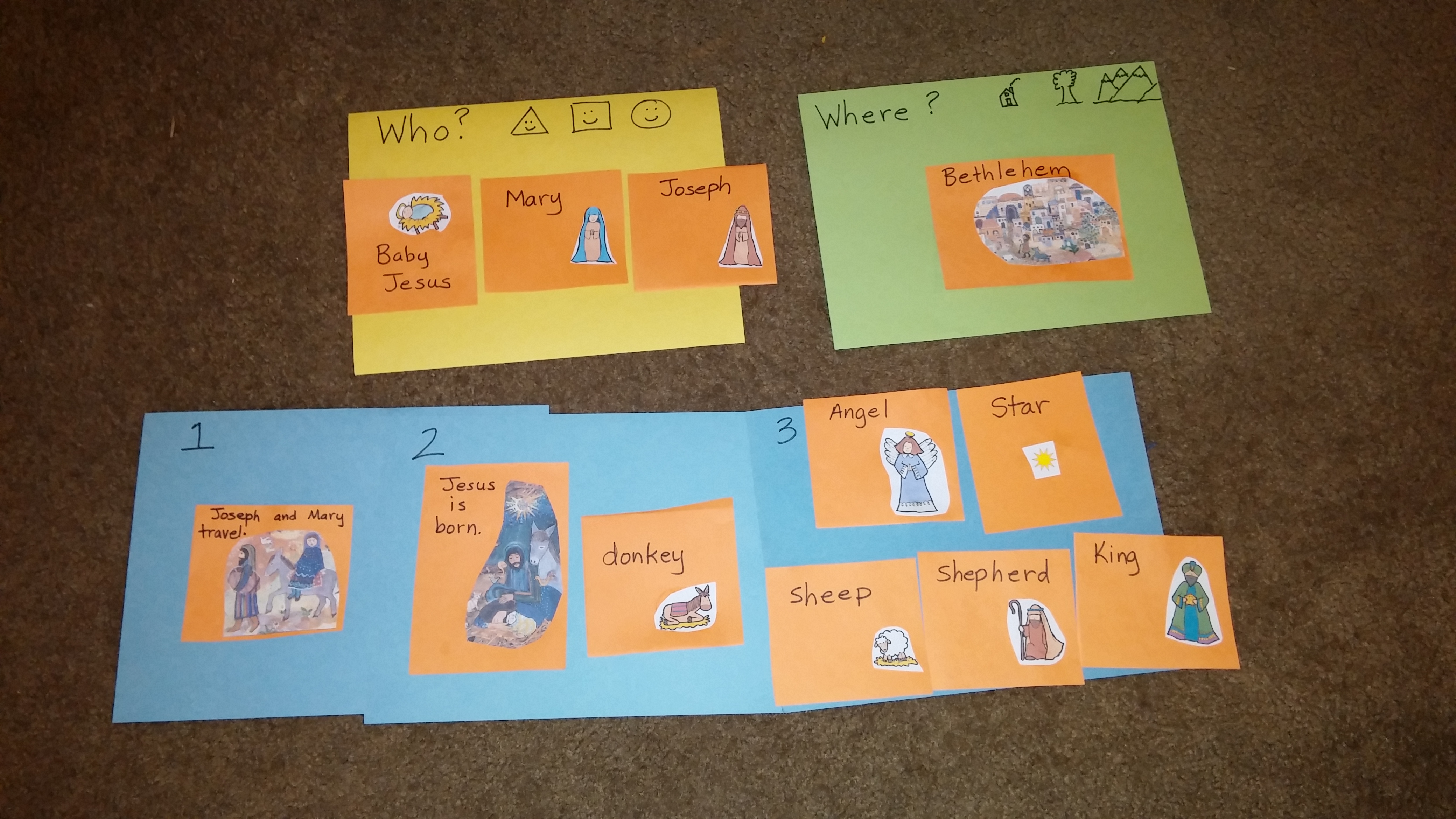
  • I made picture cards of the main characters, scenes, and events from the story. I had the older grands use them to make a story map of the book.
Picture cards can be used for so many different activities. They can be used with non readers as well as emergent readers. In this picture I've shown how I helped Kona create a story map of the book.

Picture cards can be used for so many different activities. They can be used with non readers as well as emergent readers. In this picture I’ve shown how I helped Kona create a story map of the book.

Musical Intelligence/Music Smart

  • Play a recording or sing songs such as “O Little Town of Bethlehem,” “O Come All Ye Faithful,” “The First Noel,” “What Child Is This?,” “Angels We Have Heard on High,” and/or “Away in the Manger.” You can find recordings or videos for most of these songs on the Internet.
  • Play a recording of “Not That Far from Bethlehem” by Point of Grace. If you don’t have a recording already, you can find videos on the Internet for this  song.

Bodily-Kinesthetic Intelligence/Body Smart

  • Create actions for “Away in a Manger” or use ones found at this website:          http://christmas.lovetoknow.com/Christmas_Songs_for_Preschool
  • Visit a Living Nativity. The one we attend each year at a local church has attendees walk to ten different scenes that explain the events of the birth of Jesus. 
  • Scavenger Hunt-Take a walk in your neighborhood for Christmas displays that show events or characters from the book. Make a list with words or use picture cards of items or characters that you would like the child(ren) to find. Ideas for this Scavenger Hunt include: baby Jesus, Mary, Joseph, manger, Christmas star, shepherds, angels, and wise men. (You could also use this list if you go to a Living Nativity.)

Interpersonal Intelligence/People Smart

  • Use dramatic play to enact a journey to Bethlehem using robes, sheets, or pillowcases to improvise costumes. A baby doll can be the baby Jesus. (Use the manger idea under “Naturalist Intelligence” to make the crib for the baby.)
  • Guessing Game: Have one person call out a letter of the alphabet, and another person name something from the Christmas story that starts with that letter. (You can decide whether it has to be the exact same word from the book or if other responses are allowed. For example, the book has “A is for Augustus,” but if my grandsons answered “Angels” I would consider that a correct answer.)

 Spatial Intelligence/Picture Smart

Tahoe was eager to use his pattern blocks on pre-made mats to make Nativity scenes.

Tahoe was eager to use his pattern blocks on pre-made mats to make Nativity scenes.

  • I gave the grands some pattern blocks to make pictures of Nativity scenes. I used the Nativity pattern block mats I found on this wonderful website: http://thisreadingmama.com/nativity-pattern-block-mats/
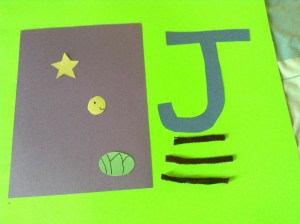
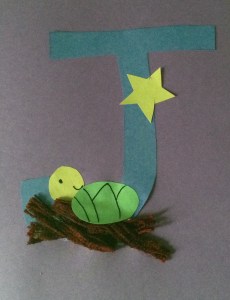
  • The Letter “J” project-It just so happened that “J” was our alphabet letter of the week, so we created a picture of the baby Jesus laying in a manger made by the hook of the “J”.
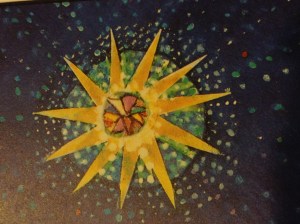
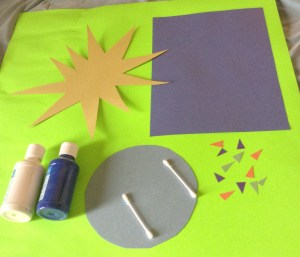
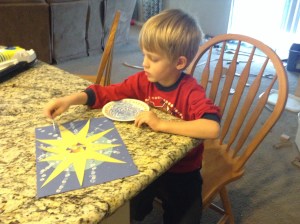
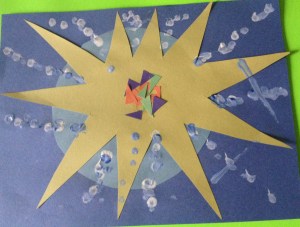
  • Christmas Star project-The book has such gorgeous illustrations and I wanted the older grandsons to notice them. Since the Christmas star appeared on many pages of the book, I designed a project for Kona and Tigger that would look similar to the one in the book.

Logical/mathematical Intelligence/Number Smart

  • I had Tahoe count the images on each page. For example, he counted all the people in the “C is for Crowds” page and the angels on the “H is for Heavenly Host” page. 
  • Using a “child friendly” nativity set as manipulatives, I created story problems for Kona and Tahoe such as, “If two shepherds and three wise men came to see the baby Jesus, how many people visited Him in all?”

Naturalist Intelligence/Nature Smart

  • Find natural items, such as twigs or straw, to make a manger.
  • Gaze at the night sky to find the brightest star you can see. Do you think any of them are bright enough to be the Christmas star? (If you want to go into depth on this topic, there are many articles on the Internet that speculate about the origins of the Christmas star.)

 Intrapersonal Intelligence/Self Smart

  • Let each child engage with a “toddler friendly” nativity set. If you listen to the child while he/she plays, you can get a good sense of their understanding of the events regarding the birth of Jesus. (I loved watching one of my older grandsons play with the set. He was very concerned that the baby Jesus have enough food. Bless. The youngest grand, Tahoe, focused on playing the music that went with the manger. Obviously he is learning a lot using his musical intelligence.)

    Kona enjoyed playing with the nativity set by himself.

    Kona enjoyed playing with the nativity set by himself.

  • Ask each child their favorite letter, picture, or event from the story.
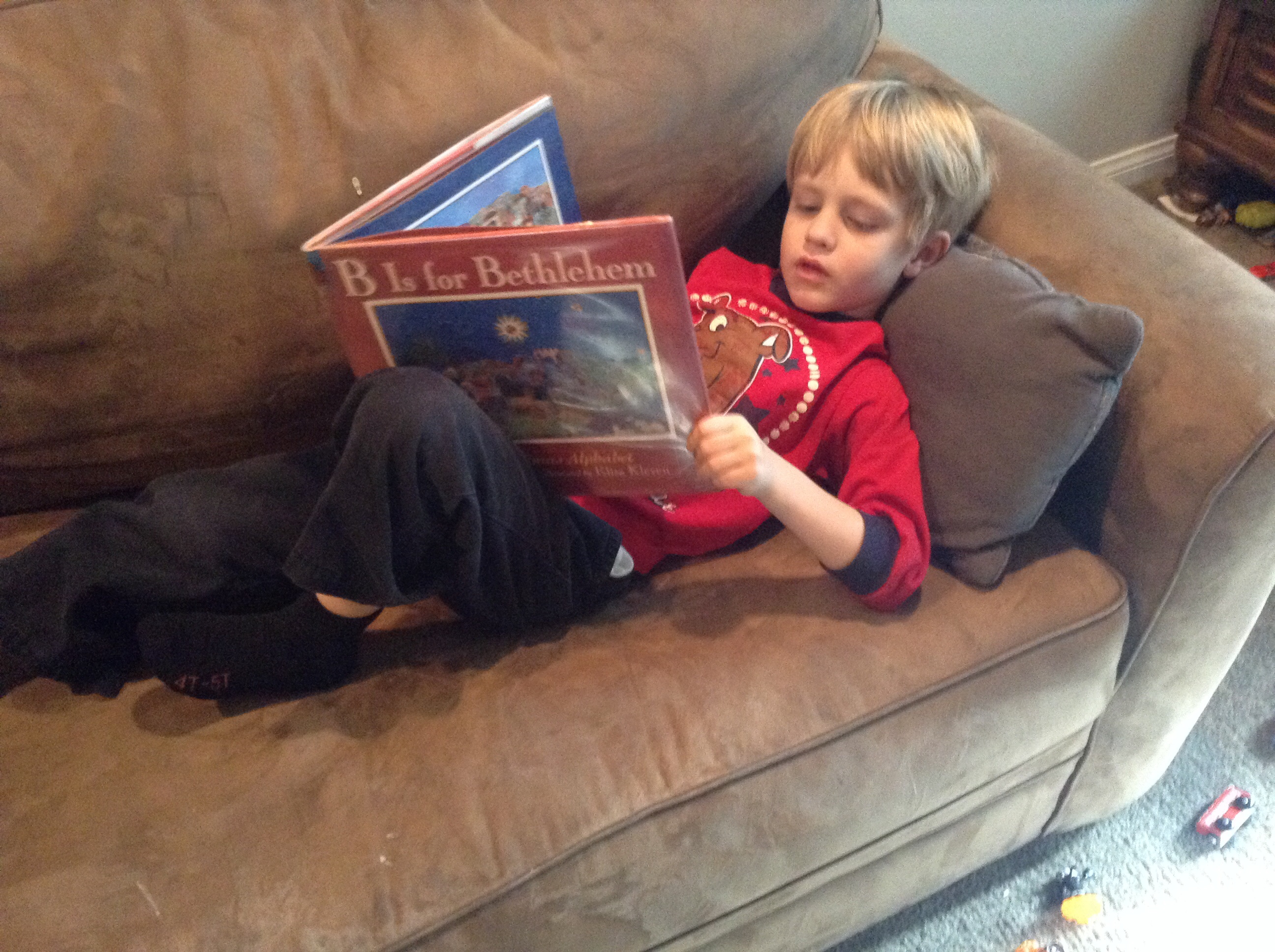
  • Allow each child an opportunity to look at the book by themselves.
Kona loved the illustrations.

Kona loved the illustrations.

 While this book was first written for second graders, and my grandsons are all younger than that, they got a lot out of this book study. This is a book I can use for many years with them and change my literacy goals for them as they mature.

I hope you are finding these Multiple Intelligence activities useful as you plan lessons for children in your care. If you would like to see more of these unit studies as I create them, you can become a follower of this blog.

thank-you-clipart-thank-you-flower

I love to add my blog posts to link parties such as:


8 Comments »

Teaching the Letter R – The M. I. Way

I have been teaching a different letter of the alphabet each week to my two youngest grandsons: Kona (4) and Tahoe (2). My focus for Kona has been writing the letter and learning its sound in words. My goal for Tahoe was letter recognition and vocabulary development.

I decided to teach the vowels first, so Kona would be able to blend sounds into words once I taught him some consonants. My first few weeks covered the vowels with the “short” sound. (You can find two posts about teaching short vowels in my sidebar.)

Next I began teaching the consonants and thought I would just go in alphabetical order (mostly so I could easily remember which letters had already been taught).  That was working fine until Kona pleaded, “Mimi, when are you going to teach the letter R? It’s my favorite letter!” How could I disappoint such an eager learner? So I made lesson plans for the letter “R”  (and I had to make myself a note to return to “J” in the coming weeks).

I planned this as a four day lesson plan, doing at least two activities a day until I had taught something from each multiple intelligence. If you use this lesson plan, I encourage you to do one activity from each multiple intelligence.

Linguistic Intelligence (Word Smart)

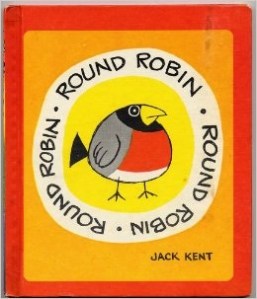
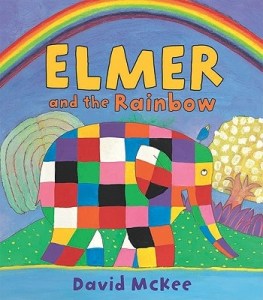
  • Read books to your child that focus on vocabulary that begins with the letter R. My grandsons’ favorite books were Round Robin by Jack Kent, and Elmer and the Rainbow by David McKee.  You can find other suggestions for the letter R at this wonderful website:

             http://www.themeasuredmom.com/letter-r-books/

  • Make a list of words that begin with the letter R as you read any book or poem to your child.

Naturalist Intelligence (Nature Smart)

  • Visit a local river for a nature hike or a picnic.
  • Form the letter “R” with natural materials such as rocks. (Or your child could just collect rocks in a bucket which is what Tahoe wanted to do.)

Spatial Intelligence (Picture Smart)

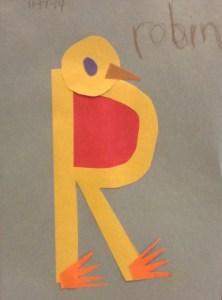
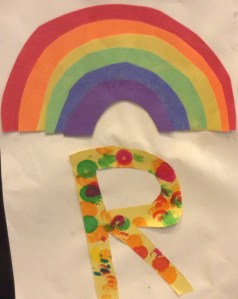
  • Use the letter “R” to inspire artwork. I had Kona make a picture of a robin with the letter “R”.   Since Tahoe loved the book about the rainbow, I helped him make a rainbow out of construction paper and then he used dot paints to decorate the letter “R” to look like a rainbow (sort of).

Interpersonal Intelligence (People Smart)

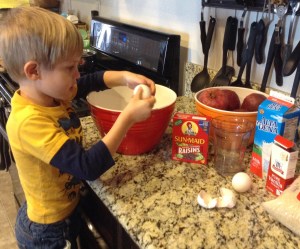
  • Make rice pudding: Cooking with my preschool-aged grands is an interpersonal activity since they need to work with an adult to follow all the directions in the recipe. I decided to make rice pudding since that is one of their favorite desserts. Here is the recipe we tried.

             http://allrecipes.com/Recipe/Baked-Rice-Pudding/Detail.aspx?evt19=1

  • Play charades: Charades also requires at least two people to play. My grands are still young enough that we have to do some of the charades together. As they get older, charades will be used as a guessing game. Once you’ve chosen the words you want for charades, place the picture and/or spelling of each word on a separate piece of paper or index card. These are some of the “R” words I used for this activity: run, rabbit, robot, rain, and railroad crossing (Kona’s idea).

Musical Intelligence (Music Smart)

  • Teach songs: You can find lyrics and even videos for these songs on the Internet to help you teach them:

              “Row, Row, Row, Your Boat”

             “When the Red, Red Robin Comes Bob, Bob Bobbin’ Along”

             “Somewhere over the Rainbow”

Bodily-kinesthetic Intelligence (Body Smart)

  • Ring toss with cones: I made rings out of pipe cleaners and we tossed them over orange cones we already had at home.
  • Rope climbing: If you have access to a climbing rope on your swing set (we do) or at the park, this would be an activity to help a child develop upper arm strength. (Kona enjoys this very much.)
  • Ring around the Rosie: This nursery rhyme and simple dance is a very traditional child’s activity (but I won’t explain its history to the grands until they are much older). If you aren’t familiar with it, you can find it at this link:

             http://wiki.kcls.org/index.php/Ring_Around_the_Rosie

Logical-mathematical Intelligence (Number/reasoning Smart)

  • Counting/writing numbers: I had Kona paint dots on a construction paper letter “R”. Then as he counted the dots, he wrote the numbers.  You could also have preschoolers count the letters in alphabetical order until they get to “R (which is the 18th letter).
I frequently have the grandsons use dot paint to help practice writing their letter of the week. I had Kona practice writing his numbers as well by counting each dot.

I frequently have the grandsons use dot paint to help practice writing their letter of the week. I had Kona practice writing his numbers as well by counting each dot.

  • Rectangles: Make rectangles out of pipe cleaners, dry spaghetti, etc. and have the child count the sides and corners.

Intrapersonal Intelligence (Self Smart)

  • Give them a construction paper “R” and some art materials to decorate it anyway they want.
  • Give each child a chance to look at the “R”  books by themselves.
  • Ask each child to tell you their favorite “R” word and why it is their favorite.


As you can see, some of the multiple intelligence activities do not have to be involved or take a lot of preparation. Preschoolers learn so much from activities that are simple to do. 

I hope you find some ideas in this lesson plan that will work for the children in your care. If you are interested in seeing more lesson plans using multiple intelligence strategies, please sign up to follow my blog.


1 Comment »

Thanksgiving Parade Book Study


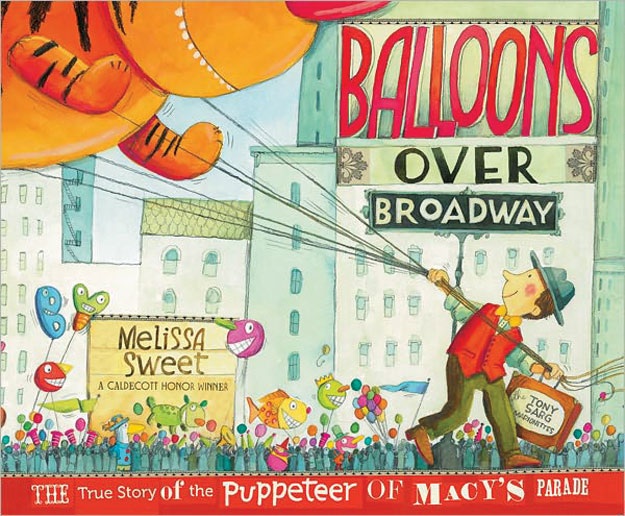
This is a wonderful book about the Macy's Thanksgiving Day Parade.

This is a wonderful book about the Macy’s Thanksgiving Day Parade.

If you love the Macy’s Thanksgiving Day Parade, you may be interested in this wonderful book by Melissa Sweet: Balloons Over Broadway: The True Story of the Puppeteer of Macy’s Parade.

It is tradition in our household to watch this parade while my husband and I are preparing the bird and stuffing on Thanksgiving morning. We passed along this tradition to our children and the grands are now old enough that I hope they will begin to understand our love for this parade.

I have always loved the parade’s balloons, but didn’t know the story behind them. Balloons Over Broadway explains how the tradition of balloons at the Macy’s Thanksgiving Day Parade began, and discusses a bit about engineering and puppetry too.

I designed this book study as a four day lesson plan. Besides reading the book daily to them, I planned to do two different activities a day. If you use this unit study, it is best to choose at least one activity from each intelligence, but you don’t have to do all of them. I usually list more than one activity for each intelligence so I have choices depending on the needs of each child:

Tigger (6) should be fascinated by the engineering aspect of the story, so I’ll make sure to include activities involving simple machines. He is working on two syllable words in reading and spelling, so I will include an activity using some of the two syllable words in the story.

Kona (4) should enjoy activities with simple machines and puppet making. He’ll work on blending skills using one syllable words with short vowel sounds.

Tahoe (2) will practice the letters of the alphabet in the title. He will probably enjoy the balloon puppets and may enjoy an activity using simple machines. I’ll spend a lot of time on the pictures in the story to develop his vocabulary.

Linguistic Intelligence (Word Smart)

  • Read the story daily. Discuss the pictures as well for comprehension and vocabulary development.
  • Syllabication: Using a few words from the story, discuss how to divide some double consonant words into two syllables. Word for this activity might include: shoppers, nodding, puppets, and balloons.
  • As you read aloud, stop at a few one syllable words with short vowels and work on blending the individual sounds together to decode the word.
  • Learn or recite the “Humpty Dumpty” nursery rhyme. (This was Kona’s idea. In the story, there is an illustration of Humpty Dumpty.)

Spatial Intelligence (Picture Smart)

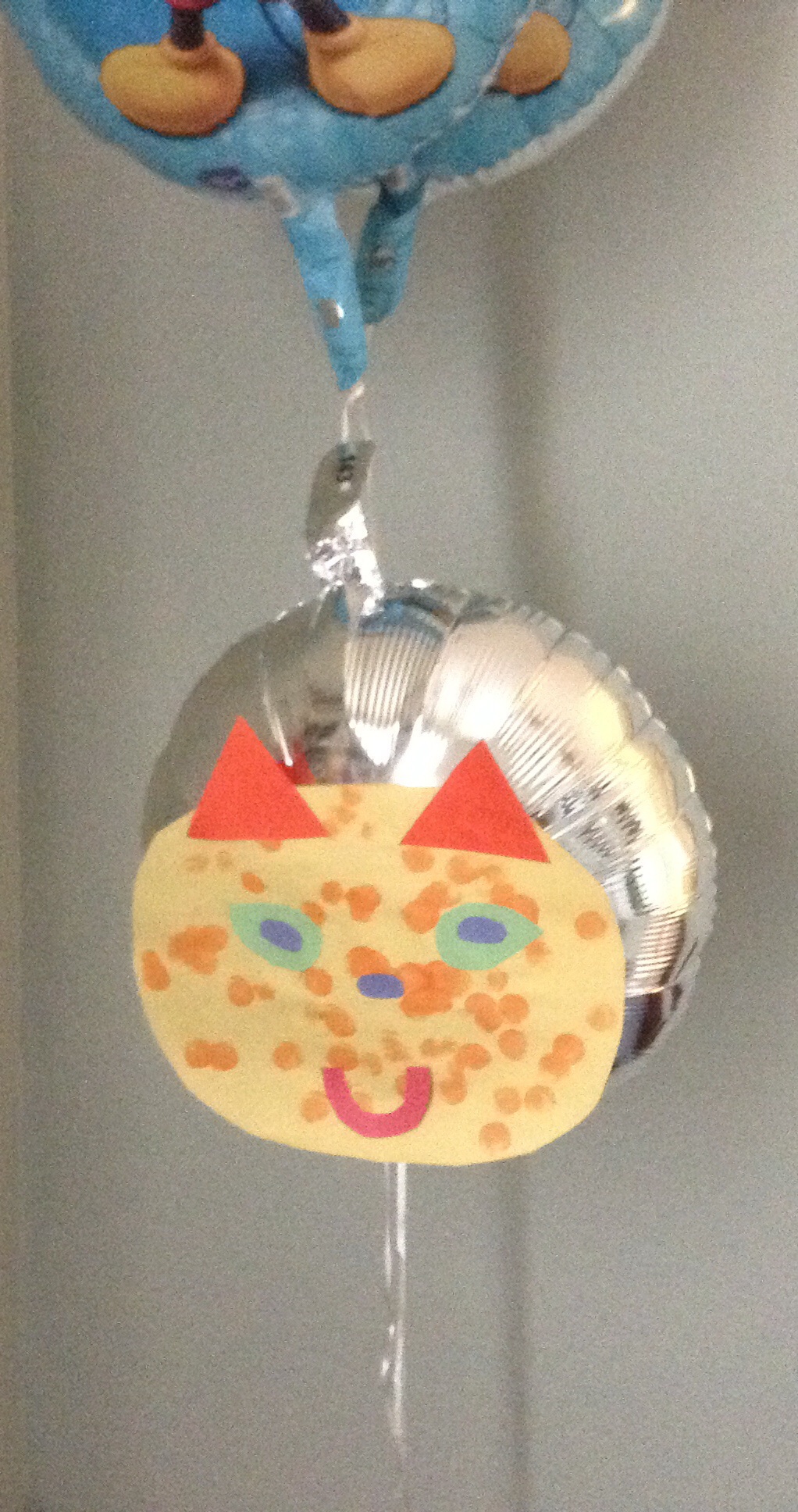
  • Make a Parade Balloon (Animals or Thanksgiving themed)-This activity requires at least three helium balloons. I had Tahoe create a cat face using construction paper and dot paint. Then we glued the face to one balloon and tied the other two helium balloons together with it to keep the face aloft. This activity can then go along with the “Parade” idea listed under the Bodily-Kinesthetic section.
The construction paper weighs down one helium balloon too much. I had to tie two other helium balloons to the one with the construction paper face to keep it floating.

The construction paper weighs down one helium balloon too much. I had to tie two other helium balloons to the one with the construction paper face to keep it floating.

  • Watch the actual parade (or record it and show portions of it). My daughter found this link to print a bingo game while the grands watched the parade:  printables.familyeducation.com/thanksgiving-printables/thanksgiving-activities-and-traditions/72954.html
  • Put stickers on air filled balloons to look like animals and tie them with a string, or attach them to a stick.
  • Watch a video about Macy’s Thanksgiving Day Balloon Inflation:

http://www.kirotv.com/videos/lifestyles/holiday/the-balloon-inflation-tradition-before-macys/vhqFK/

Interpersonal Intelligence (People Smart)

  • Improvise a puppet show with siblings or adults. Use puppets you already own, or create simple puppets with paper bags.
  • Play balloon volleyball with a sibling or adult using air-filled balloons. (We used a baby safety gate as our net, and had a spirited game with the three grands on one side and their father and I on the other side. I’m not sure who won, but we certainly had lots of giggles.)

Bodily-Kinesthetic (Body Smart)

  • Parade around the house with the balloons characters you made in the Spatial Intelligence section. (You could include the Musical Intelligence by playing “I Love a Parade” or other band music as you march.)
  • Give each child an air-filled balloon and have them count the number of times they can hit the balloon before it hits the ground. (This activity kept them very busy one night while I was making dinner.)

Naturalist Intelligence (Nature Smart)

  • Take your parade outside. Do you notice a difference with handling of your balloon outdoors compared to indoors?
  • Compare a helium balloon and air-filled balloon. Which gas would be best for the Macy’s Thanksgiving Day parade? Which balloon would be easiest to step on and pop?

Logical/Mathematical (Number/Reasoning Smart)

  • Exploring pulleys: Have each child try to lift a heavy book (such as a hard bound dictionary). Then tie some string around the book, and drape the string over a rolling pin that someone else is holding. Pull on the loose end of the string to see if it is easier to lift the book. I found this idea, along with many others exploring simple machines, at this website:

          http://kidsactivitiesblog.com/12676/simple-machines-pulley

  • Subtract 1924 (year of the very first Macy’s parade) from the current year.

Musical Intelligence (Music Smart)

  • Listen to song “I love a Parade” which is usually played at the introduction to the parade on television. (There are several versions that can be found on the Internet.)
  • Use any musical instruments you already own (or use a wooden spoon and a pot) and play along with some marching band music such as “”Seventy-six Trombones” from the musical Music Man or “March of the Wooden Soldiers” from the film Babes in Toyland.

Intrapersonal Intelligence (Self Smart)

  • Let child look over the book by self.
  • Let child play with puppets by themselves.

I’m hoping that after leading my grandsons through this book and multiple intelligence activities, they will continue the family tradition of watching this parade every Thanksgiving Day morning.

I hope you are finding these Multiple Intelligence activities useful as you plan lessons for children in your care. If you would like to see more of these unit studies as I create them, you can become a follower of this blog.
thank-you-clipart-thank-you-flower

I love to add my blog posts to link parties such as:

3 Comments »

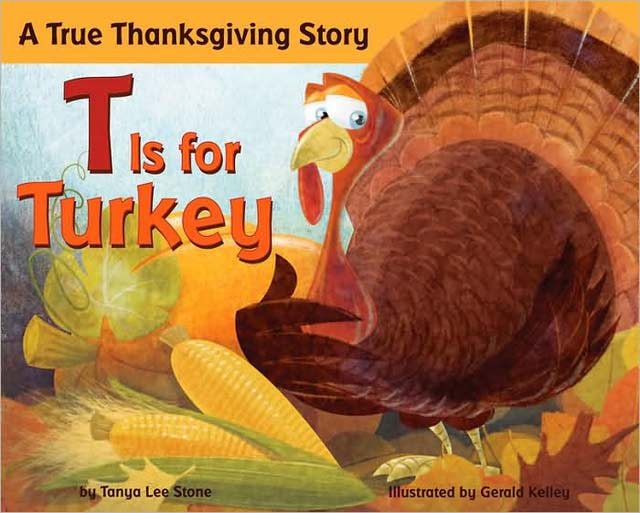
T is for Turkey – Book Study Unit

image

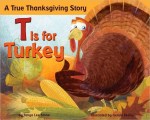
This week I planned a multiple intelligence study unit for the book, T is for Turkey by Tanya Lee Stone. Not only is this a fun alphabet book with adorable pictures, it contains lots of good information about the Thanksgiving holiday. (I learned some new information too.)

As I planned this study unit, I kept the needs of my grandsons in mind.

  • Tigger, 6, already had some knowledge of Thanksgiving, so I wanted to build on this. He would most likely be able to read or decode several words on each page, so I would probably have him read several of the pages with me on the second or third read throughs. Tigger would also benefit from recognizing rhyming words in the story. Additionally, I wanted him to memorize the date in the story.
  • Kona, 4, knows short vowels and most consonants, so I would focus on having him repeat initial sounds of the keyword on each page. He’s at an age when he should be learning some basic facts about Thanksgiving. Since he loves cooking and dramatic play, I definitely wanted to include those type of activities. Crafts should be designed that would develop his fine motor skills.
  • Tahoe, 2,  will really enjoy the pictures in the book, so I’ll spend a lot of time discussing what he sees in the pictures. He will probably enjoy dramatic play and other physical activities. His crafts will focus on shapes and gluing.

I always over plan, and I may list more than one activity for each intelligence so I have choices. If you use this study unit, it is best to do at least one activity from each intelligence, but don’t feel that you need to use every activity I described. This was planned as a four day unit. Each day I read the book to them and provided two other activities from this list.

Linguistic Intelligence (Word Smart)

  • Read the book T is for Thanksgiving daily..
  • Discuss the rhyming words on each page.
  • Discuss the sound each alphabet letter makes at the beginning of the keyword on each page.
  • Make a list of foods served at the first Thanksgiving as shown in the pictures or mentioned in the story.

Logical/Mathematical Intelligence (Number Smart)

  • Have two youngest grands count the number of letters in the alphabet as you turn each page.
  • Create math problems based on the story or pictures. For example, “If two Wampanoags and three colonists sit at the same table, how many people will that be?”
  • Have oldest grand  write or trace the year 1620 on some paper or on a rock in the yard. Teach him how to pronounce this year.
  •  Show oldest grand  how to subtract 1620 from the current year.

.

Spatial Intelligence (Picture Smart)

  • Find Cape Cod on a map or globe. You can also trace the voyage on a globe starting at England, sailing across the Atlantic Ocean, and ending at Massachusetts.
  • Make a poster of foods eaten at the first Thanksgiving by drawing pictures or cutting them out of magazines.
  • Turkey Crafts-I planned two different crafts for the grands:

The first craft was chosen for Tigger and Kona.  For the body and wattle of the turkey I had them fold different size (and color) pieces of construction paper and drew a “half heart” along the fold for them to cut. They also used scraps of construction paper for the head, eyes, beak, legs, and feet. These were all glued to a larger piece of construction paper. The feathers were created the day before using paper towels, markers, and small drops of water from an eye dropper or straw.(Ooooh, Science!) To make each feather, they drew a dark line with a marker on a piece of paper towel. I actually had the grands draw over the line three times with the marker to make sure there was plenty of of ink on the paper towel. Then I had them carefully place small drops of water from a straw all along the line. (An eye dropper would be easier, but we didn’t have one. To use the straw method, I added 1/4 inch of water to a cup. For each drop, one of the grands dipped the straw into the cup to capture some water. He placed a finger on top of the straw before lifting the straw out of the cup to keep the liquid inside the straw. Next he put the straw on the marker line and lifted his finger from the top of the straw to release the water. We practiced this first before using the straw method on the marker lines. Make sure to stay on the line when releasing the water, otherwise you won’t get the desired effect. Repeat this method until water is placed all along the line.) The “capillary” action of the water on the paper towel will spread the ink to make a “feathery” look. I let the paper towels dry thoroughly before cutting them into feather shapes and having the grands glue them on the turkey picture. (See pictures below for more clarification.)

The second craft had less steps and was planned for Tahoe. I cut construction paper circles for the body and head of the turkey. I also cut out eyes, a beak, and legs from scrap paper. He glued these onto another piece of construction paper. Then I used some leaf foam stickers we already had around the house to become the “feathers” for the turkey. I had to begin peeling the paper on the back for him, and he peeled the rest. Then I showed him the spot to place the leaf on the turkey. (See the last picture below for Tahoe’s finished product.)


 Musical Intelligence (Music Smart)

  • Play Aaron Copland’s “Appalachian Spring” while doing craft activities or when reading the book aloud.
  • Transform “Old McDonald Had a Farm” into “Plymouth Pilgrims Had a Feast” and add verses to go along with information from the book such as…

“Plymouth Pilgrims had a feast,

A-E-I-O-U,

and at this feast they ate some corn,

A-E-I-O-U,

with a kernel here, and a kernel there,

kernel here, kernel there, lots of kernels everywhere,

Plymouth Pilgrims had a feast,

A-E-I-O-U.”


Interpersonal Intelligence (People Smart)

  • Guessing Game- After reading the book several times, have the youngest grand say an alphabet letter and have the older grands say the keyword from the story to match the letter.
  • Cooking- We made a corn pudding recipe I found online. I adjusted the directions slightly by having the grands add all ingredients except the butter in a mixing bowl (so they didn’t have to work with a hot buttered casserole dish). I also had them add two eggs, which other reviewers of the recipe had recommended. After they mixed all the other ingredients, I poured the concoction into the hot buttered casserole dish, stirred again, and placed the dish in the oven. Tahoe set the timer for 30 minutes, but I kept the pudding in the oven about ten more minutes because it didn’t look done after 30 minutes. The two youngest grands had this for their mid-morning snack when it came out of the oven. Here is the link for the recipe:

http://allrecipes.com/Recipe/Easy-Corn-Pudding/

Naturalist Intelligence (Nature Smart)

  • Visit a farm stand or actual farm to see what foods are being harvested at this time of year.
  • Plant seeds for beans, squash, or any vegetable that will grow this time of year in your geographic location.
  • Walk around the neighborhood or park. Notice the rocks that you see  on your walk. Do you think any if them are large enough to be Plymouth Rock? If you see a special rock, give it a name.

Intrapersonal Intelligence (Self Smart)

  • Ask each grand to name their favorite page in the story.
  • Ask each grand what they are thankful for at this time of the year.
  • Give each grand the opportunity to explore this book or other Thanksgiving themed books by themselves.


Bodily-Kinesthetic Intelligence (Body Smart)

  • Dramatic Play-Reenact the first Thanksgiving meal. Don’t forget to use the phrase “Good Morrow ” as you greet each other.  
  • Gathering Logs-Place several packaged paper towel rolls at one end of a room or hallway. Have a grand start at the other end of the room or hallway and run to collect one log. Then return to the starting line to stack the “log”. Repeat back and forth until all the “logs” have been collected. (Sorry the pictures below are blurry, but my camera is not very good at focusing on running toddlers). 

This post has been featured at the following link party:


featured-sharing-saturday-option-2-002


I hope you are finding these Multiple Intelligence activities useful as you plan lessons for children in your care. If you would like to see more of these unit studies as I create them, you can become a follower of this blog.
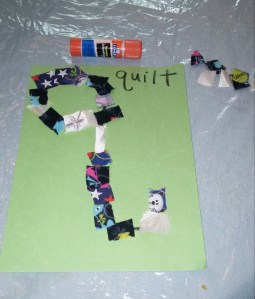
thank-you-clipart-thank-you-flower

I love to add my blog posts to link parties such as:


16 Comments »

Five Little Pumpkins Mini Multiple Intelligence Lesson

 The grands and I are enjoying the story “Five Little Pumpkins” so much I decided to create a mini lesson using multiple intelligence strategies. These projects are not only fun, but contain academic concepts which are relevant to the needs of my grandsons, ages 2-6. Besides reading the story to the grands daily, I used two activities each day, so it was a four day unit. It is best to do at least one activity from each intelligence. However, I often plan more than one activity for each intelligence to give myself choices, so I don’t necessarily use them all.

Note: I have updated this post in October 2016. I revisited this lesson with my grandsons and added a few more activities. In 2016, the grands were ages Tahoe (4), Kona (6), and Tigger (8).

Linguistic Intelligence (Word Smart)

  • Read  the book or poem “Five Little Pumpkins” . If you need a copy of it,  here is the website I used:

              http://aboutthesethings.wordpress.com/2014/10/20/five-little-pumpkins/

  • Discuss and/or list the rhyming words.

Logical/Mathematical Intelligence (Number/Reasoning Smart)

  • Walk around neighborhood and count the number of pumpkins you see.
  • Create math problems with the pumpkins such as, “If only three pumpkins fell off, how many pumpkins would be left on the gate?”
  • Make Pumpkin Spice Mini Muffins (Gluten Free recipe): Work on measurement skills by baking some pumpkin muffins. Since one of the grands is on a gluten free diet, I found this recipe which all of them could eat. We also used almond milk in the recipe. They had so much fun making these muffins which we made on two different occasions this fall: http://smashedpeasandcarrots.com/gluten-free-pumpin-donut-muffin-recipe/


Spatial Intelligence (Picture Smart)

  • Carve a pumpkin to make a face from the story.
  • Make a diorama of the story. To make the one I have shown below, I used a shoebox lid, scissors, five individual sections from an egg carton, five equal sized sections that I cut from a paper towel roll, five green pipe cleaner pieces (about four inches each), orange paint, brown paint, blue construction paper, yellow construction paper, glue stick, and a black marker. My grandsons painted the egg carton sections orange and the paper towel sections brown. (I didn’t have the correct colors so we did some color mixing-another lesson for them.) Once those were dry, the grandsons drew pumpkin faces on each orange egg carton section with the black marker. Cut the blue construction paper to fit the inside of the shoebox lid. You can also make pictures on the blue construction paper, like fences, trees, and other pumpkins. (My grandson outlined his hand to draw a tree.) Glue the blue construction paper to the inside of the shoe box lid. Cut out a yellow “moon” from yellow construction paper and glue onto the blue construction paper. Place the paper towel sections next to each other on the bottom of the shoebox lid and place the “pumpkins” on top of them. Make a hole on the top of each “pumpkin” and fit the pipe cleaner inside to look like a stem (and to help keep the egg carton on top of the paper towel section).  You could hot glue all the pieces into place on the shoebox lid, but I wanted my grandsons to play with the diorama and be able to move the pieces around, so I didn’t glue them down.


 Musical Intelligence (Music Smart

  • Play Vivaldi’s “The Four Seasons-Autumn”  as you read the story aloud.
  • Have your child help you create a simple melody to go with this poem.

Interpersonal Intelligence (People Smart)

  • Dramatic play-Reenact the story of the five pumpkins with siblings or adults.
  • Most of the other activities in this lesson plan can be done with their siblings.


Bodily-kinesthetic Intelligence (Body Smart)

  • Fine motor activity: For this activity I used brown construction paper and a marker to created a “gate” that I glued to the back of a sturdy game board box we had around the house.  Then using tongs or a large spoon, I had the grandsons place five orange pom poms (pumpkins) on top of the box (gate).  Once the pom poms were placed on the top of the box, the grands were asked to become the “wind” in the story and blow the pumpkins off the gate.


 Intrapersonal Intelligence (Self Smart)

  • Give each pumpkin a name.
  • Discuss: Which is your favorite pumpkin in the story?
  • Let child play with diorama to create new stories for the pumpkins.

Naturalist Intelligence (Nature Smart)

  • Visit a pumpkin farm.
  • Walk around neighborhood to see where your neighbors have pumpkins. Are any of them on a gate?
  • If you have a real pumpkin for the holidays, you can feel and count the number of bumps on the outside and the number of seeds inside of it.


I hope the children in your care enjoy these activities as much as my grandsons did. Wishing all my readers a fun and safe Halloween! 

I hope you are finding these Multiple Intelligence activities useful as you plan lessons for children in your care. If you would like to see more of these unit studies as I create them, you can become a follower of this blog.
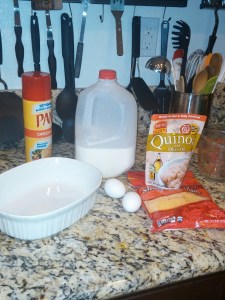
thank-you-clipart-thank-you-flower

I love to add my blog posts to link parties such as:


11 Comments »

Laura Grace Weldon

Free Range Learning, Creative Living, Gentle Encouragement, Big Questions, Poetry, Occasional Drollery

Teach Beside Me

Educate Creatively- Hands-on teaching ideas

P is for Preschooler

Smile! You’re at the best WordPress.com site ever

Life with Moore Babies

Educating Through Multiple Intelligences

about these things

Philippians 4:8

booksandopinions.com

The Book Reviews You Can Trust!

Enchanted HomeSchooling Mom

Educating Through Multiple Intelligences

A Homeschool Mom

Inspiration For Learning and Life.
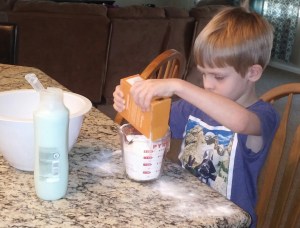
I Can Teach My Child!

Educating Through Multiple Intelligences

Educating Through Multiple Intelligences

Learn with Play at Home

Educating Through Multiple Intelligences

Learn Play Imagine

Educating Through Multiple Intelligences

Epic Fun for Kids

Educating Through Multiple Intelligences

No Time For Flash Cards

Educating Through Multiple Intelligences

Real Life at Home

printables, worksheets, activities, and crafts for kids

Teaching & Being a Mom

Educating Through Multiple Intelligences

Carrots Are Orange Montessori

Educating Through Multiple Intelligences

The OT Toolbox

Educating Through Multiple Intelligences

Simple Homeschool

Educating Through Multiple Intelligences

Coffee Cups and Crayons

Simple play ideas, learning activities, kids crafts and party ideas, plus acts of kindness for kids!

Playdough To Plato

Empowering teachers with the tools, training, and support you need to help EVERY student learn to read.

The Measured Mom

Educating Through Multiple Intelligences